
 English
 中文简体
中文简体
How do I operate the Pile Driving Vessel?
Content
- 1 Operate Through a Precise Four-Phase Workflow
- 2 Pre-Operation: Dynamic Positioning and Site Preparation
- 3 Core Operational Sequence: From Gripper to Set Depth
- 4 Critical Safety Protocols: Refusal Criteria and Environmental Monitoring
- 5 FAQ: Addressing Common Operational Challenges
- 6 Key Performance Indicators for Efficient Operation
Operate Through a Precise Four-Phase Workflow
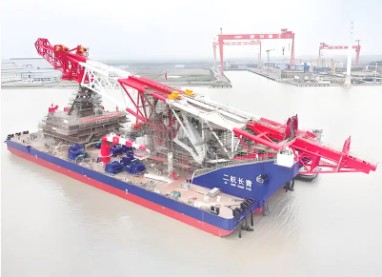
Operating a pile driving vessel requires a structured, safety-critical sequence. The direct conclusion is that successful operation is achieved through a disciplined four-phase workflow: Dynamic Positioning (DP) station-keeping, crane and leader handling, pile gripping and hoisting, and the controlled hydraulic hammering process. Modern vessels utilize integrated bridge systems where a single operator manages DP, while a separate piling operator controls the hammer, ensuring redundancy and safety. For example, on a typical offshore wind farm installation, the vessel must maintain a position within ±0.5 meters of the target coordinate during the entire driving process to ensure pile verticality and prevent structural damage.
Pre-Operation: Dynamic Positioning and Site Preparation
Before a pile touches the seabed, the vessel must achieve "station-keeping" status. This is not merely anchoring; it involves sophisticated DP systems that use GPS, gyrocompasses, and wind sensors to automatically control thrusters. For a jack-up vessel (which elevates itself above the water), the process involves pre-loading the legs to ensure the seabed can support the operational load. Data from the International Marine Contractors Association (IMCA) shows that over 80% of installation delays during the pre-operation phase are due to either seabed soil inconsistencies or DP sensor calibration errors.
- Soil Penetration Tests (CPT): Vessels must cross-reference real-time CPT data to confirm the bearing capacity matches the engineering plan. A variance of more than 10% in soil resistance triggers a stop-work protocol.
- Environmental Limits: Operations typically cease when wind speeds exceed 12 m/s (Beaufort Force 6) or wave heights surpass 1.5 meters to maintain the integrity of the pile gripper and crane.
Core Operational Sequence: From Gripper to Set Depth
The physical driving phase is a high-precision engineering task. The sequence below represents the standard for monopile installations in offshore wind, which account for over 70% of global pile driving activities.
1. Pile Upending and Gripping
The pile is lifted horizontally from the transportation barge using a main crane. An upending tool rotates the pile to a vertical position. The vessel’s hydraulic gripper then closes around the pile with a clamping force typically ranging from 300 to 800 tons to hold it steady against the leader (the guide frame). This prevents lateral movement that could damage the pile coating.
2. Self-Penetration and Hammer Alignment
Once lowered, the pile penetrates the seabed under its own weight—a phase known as "stabbing." Data from this phase dictates the initial hammer energy. The hydraulic hammer, which can weigh upwards of 250 metric tons, is then positioned on top of the pile. Modern IHC S-2000 or Menck MHU series hammers use automated systems to adjust stroke height and blow rate based on real-time soil resistance.
| Hammer Model | Ram Weight (Tons) | Max Energy (kJ) | Blow Rate (BPM) |
|---|---|---|---|
| Menck MHU 2400S | 240 | 2,400 | 35-45 |
| IHC S-2000 | 200 | 2,000 | 30-50 |
| Juno 200-4 | 200 | 1,800 | 35-50 |
Critical Safety Protocols: Refusal Criteria and Environmental Monitoring
The most critical operational decision is determining when to stop driving. "Refusal" is defined as when the pile fails to advance a specified distance (usually 25 mm) after a set number of blows (often 100 blows). Continuing beyond this risks pile fatigue or structural failure. Industry guidelines mandate that operators monitor the "blow count" meticulously. If the blow count exceeds 200 blows per 0.25 meters of penetration, the operation must halt to reassess soil data.
Additionally, underwater noise mitigation is a mandatory operational aspect for environmental compliance. Operators are required to deploy noise abatement systems such as big bubble curtains (BBCs) or double big bubble curtains (DBBCs) when the pile diameter exceeds 4 meters to reduce underwater noise levels from 180 dB re 1µPa to below 160 dB at 750 meters, protecting marine mammals as per JNCC (Joint Nature Conservation Committee) standards.
FAQ: Addressing Common Operational Challenges
Based on operational reports from major offshore projects (e.g., Hornsea 2 and Dogger Bank), the following are the most frequently asked questions regarding vessel operation:
What happens if the pile tilts during driving?
If a pile deviates from verticality by more than 0.5% to 1% (typically 0.3 meters over a 30-meter pile), operations cease immediately. The vessel’s hydraulic gripper can apply corrective lateral force, but if the tilt exceeds the gripper’s capacity (±3 degrees), the pile is considered non-conforming and may need to be cut or abandoned, leading to costs exceeding $1 million USD per incident.
How is pile driving fatigue managed?
Operators use "stress wave analysis" sensors attached to the pile. The system calculates the cumulative fatigue damage in real-time. If the calculated fatigue usage exceeds 75% of the design limit, the operator reduces the hammer energy to prevent micro-cracking in the steel, ensuring a design life of 25 to 35 years for the structure.
What is the role of the DP operator vs. the Piling operator?
There is a strict separation of duties. The DP operator focuses solely on the vessel’s position relative to the pile target using six degrees of freedom (surge, sway, heave, roll, pitch, yaw) control. The Piling operator controls the hammer energy, stroke, and monitors the pile’s vertical alignment. Communication is maintained via a dedicated closed-loop intercom, with dual confirmation required for any emergency kill command.
Key Performance Indicators for Efficient Operation
Efficiency in pile driving vessel operation is measured by specific KPIs. The industry benchmark for a standard 8-meter diameter monopile is a total installation time (from stabbing to final blow) of 4 to 6 hours. The table below illustrates the breakdown of operational efficiency metrics used by leading contractors.
| KPI Category | Target Metric | Critical Deviation |
|---|---|---|
| Pile Verticality | ≤ 0.25% | > 0.5% |
| Final Set (Refusal) | 25mm / 100 blows | 0mm / 100 blows |
| Hammer Energy Accuracy | ±5% of target | > ±10% |
| DP Station Keeping (Max Offset) | 0.5 meters | 1.0 meters |

Copyright 2025 Taizhou Sanyang Heavy Machinery Co., Ltd. All Rights Reserved Professional Dredging Equipment Manufacturer

Back To Top