
 English
 中文简体
中文简体
How Dredgers Swivel Joint Selection and Maintenance Strategies Directly Impact Operational Efficiency and Pipeline Safety?
Content
- 1 Functional Positioning and Technical Principles of Swivel Joints in Dredging Pipeline Systems
- 2 Pressure Ratings and Connection Styles Are the Primary Decision Parameters for Selection
- 3 Connection Styles and Mounting Forms Determine Field Adaptation Efficiency
- 4 Deflection Angle Specifications Must Precisely Match Vessel Motion Amplitude
- 5 Maintenance Strategy and Life Cycle Management Are Core to Reducing Total Cost of Ownership
- 6 Three Definitive Directions for Dredgers Swivel Joint Technology Development
In dredging operations, swivel joints serve as the core rotating components connecting mud delivery and discharge pipelines, with their performance directly determining overall vessel operational efficiency and pipeline system safety. The current industry consensus is that swivel joint selection and maintenance strategies have evolved from "functional adequacy" to "precise matching by operating conditions". As global dredging project volumes continue to grow, operating depths increase, and environmental standards tighten, technological advancements in swivel joints across three dimensions—pressure capacity, sealing durability, and rapid disassembly efficiency—have become critical breakthrough points for dredging fleets seeking cost reduction and productivity gains.
Functional Positioning and Technical Principles of Swivel Joints in Dredging Pipeline Systems
Dredging vessels must simultaneously cope with complex sea state variations and diverse sediment layer geology during operations. The core function of swivel joints lies in providing bi-directional angular compensation in both vertical and horizontal directions, enabling mud pipelines to maintain stable flow under conditions of vessel rolling, tidal fluctuations, and seabed terrain undulations—preventing stress concentration or flow rate degradation that would result from rigid pipeline connections.
Rapid Adjustment Mechanism of Rotating Ball and Gland Structure
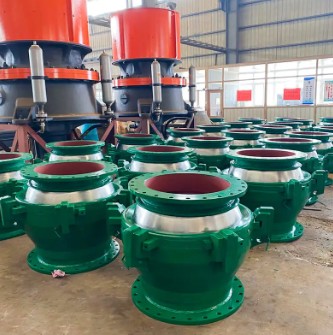
Swivel joints employ an interlocking design between the swivel ball and base, achieving rapid angular adjustment and locking through gland rotation. The advantages of this structure manifest at two levels:
- During emergency conditions or pipe replacement operations, operators can complete mud delivery pipe disconnection and removal within minutes by rotating the gland, significantly shortening non-operational downtime
- Swivel joints of different diameters and angles feature interchangeability, enabling flexible connection and separation between multiple pipe groups to adapt to the frequent pipeline routing adjustments required in dredging projects
From a fluid dynamics perspective, the internal flow channel design of swivel joints must ensure that mud flow velocity loss remains within 5% even at maximum deflection angles; otherwise, dredging output will be directly reduced and pipeline wear accelerated.
Pressure Ratings and Connection Styles Are the Primary Decision Parameters for Selection
The pressure rating of a swivel joint directly correlates with its applicable operating conditions and material specifications. Current mainstream products cover multiple pressure ranges from 1 MPa to 3 MPa and above, with different ratings corresponding to differentiated wall thicknesses, seal materials, and ball surface treatment processes.
Correspondence Between Pressure Ratings and Typical Application Scenarios
| Pressure Rating | Typical Application | Mud Characteristics | Sealing Requirements |
|---|---|---|---|
| 1 MPa | Shallow water routine reclamation | Low concentration, fine particle mud | Standard rubber seals |
| 1.5 MPa | Medium depth channel maintenance | Medium concentration mixed mud | Reinforced rubber or polyurethane seals |
| 2 MPa | Deep water basin excavation | High concentration coarse particle mud | Metal-frame composite seals |
| 2.5 MPa | Hard formation cutting and transport | Gravel-containing highly abrasive mud | Hard alloy sealing faces + multi-layer seals |
| 3 MPa and above | Ultra-deep water or high-pressure pumping | Extreme concentration and abrasion | Special alloy seals + self-lubricating system |
If the selected pressure rating is too low, seals will accelerate failure under high-pressure mud erosion, leading to frequent leakage. If the rating is excessively high, unnecessary weight increase and cost redundancy result. The empirical rule is to select a rated pressure rating at 1.2 to 1.3 times the actual maximum working pressure, with margin reserved for pressure degradation after seal wear.
Connection Styles and Mounting Forms Determine Field Adaptation Efficiency
Swivel joint connection styles are divided into two mainstream forms: gland type and bolted type, with mounting styles covering flange connection and welded fixation. Different combinations suit differentiated field conditions and maintenance strategies.
Application Boundaries Between Gland and Bolted Connections
Gland connections achieve rapid ball locking and release through gland rotation without requiring additional tools, making them particularly suitable for conditions requiring frequent disassembly—such as multi-pipe rotation operations or emergency repair scenarios. Their drawback is that under sustained vibration environments, gland preload may gradually decay, requiring regular inspection of fastening status.
Bolted connections, conversely, use high-strength bolts to rigidly lock the ball and base, offering higher connection reliability under high-vibration, high-torque conditions. However, their disassembly requires specialized tools, with single pipe replacement time typically 30% to 40% longer than gland types. Therefore, bolted connections are better suited for long-cycle continuous operations with lower pipe replacement frequency in deep-water dredging projects.
Scenario Selection Between Flange and Welded Mounting
- Flange mounting: Facilitates later disassembly and replacement, suitable for modular pipe section design, capable of reducing full lifecycle maintenance costs by approximately 15% to 20%. However, flange face flatness requirements are high, and installation precision directly affects sealing performance
- Welded mounting: Provides higher structural rigidity and fatigue resistance, suitable for permanent or semi-permanent pipe section arrangements. Weld quality must be verified through non-destructive testing (such as ultrasonic or radiographic inspection) to ensure weld defect rates remain below 2%
Deflection Angle Specifications Must Precisely Match Vessel Motion Amplitude
The deflection angle of swivel joints directly determines their capacity to compensate for vessel rolling and pipeline displacement. Current industry standard specifications are 15° and 18° configurations, with selection primarily based on operating sea state grades and pipeline span.
In inland river and coastal areas such as Bohai Bay and the Yangtze River estuary, sea states are relatively mild, with vessel roll angles typically not exceeding 8° to 10°. Swivel joints with 15° deflection specifications can meet compensation requirements while being more compact and lighter in structure. In open sea areas such as the South China Sea, East China Sea, or Indian Ocean where sea states are more complex, vessel roll can reach 12° to 15°, compounded by pipeline drift from tidal currents—making 18° deflection specifications the more prudent choice.
It is particularly important to note that larger deflection angles are not necessarily better. Excessive deflection angles increase the gap between the ball and base, reducing the effective pressure-bearing area of the sealing contact surface and, under high-pressure conditions, actually increasing leakage risk. Therefore, deflection angles should take the minimum value that satisfies motion compensation requirements, balancing flexibility with sealing reliability.
Maintenance Strategy and Life Cycle Management Are Core to Reducing Total Cost of Ownership
Swivel joint failure modes in dredging operations concentrate in three areas: seal wear failure, ball surface erosion, and gland or bolt fatigue loosening. Establishing systematic maintenance strategies can increase Mean Time Between Failures (MTBF) from the conventional 1,200 hours to over 2,000 hours.
Recommended Three-Tier Maintenance System
- Daily Inspection (per shift): Visual inspection of gland or bolt fastening status, listening for abnormal vibration noise, monitoring for mud leakage signs at joints
- Scheduled Maintenance (every 500 operating hours): Disassemble and inspect seal wear amounts, measure ball-to-base fit clearance, replace seal components reaching wear limits, reapply specified torque locking
- Major Overhaul (every 3,000 to 4,000 hours or annually): Perform overlay welding repair or coating reconstruction on ball surfaces, replace entire seal systems, conduct pressure testing verification to ensure no leakage under rated pressure for 30 minutes
Additionally, it is recommended to establish full lifecycle archives for swivel joints, recording wear data from each maintenance event, replacement component batch numbers, and operating condition parameters. Through data accumulation, predictive maintenance models tailored to specific sediment types and sea areas can be progressively developed, transforming reactive repair into proactive prevention and further compressing unplanned downtime.
Three Definitive Directions for Dredgers Swivel Joint Technology Development
Synthesizing current technological evolution and engineering requirements, three development directions in the dredgers swivel joint field warrant attention:
- Material Upgrades: Employing surface-hardened alloys or ceramic coating technologies to enhance ball erosion resistance, with the goal of extending service life under high-abrasion conditions by 40% to 50%
- Intelligent Monitoring: Embedding pressure and temperature sensors within joints to transmit seal status data in real time to vessel central control systems, enabling early leakage warning
- Modular Design: Driving standardization and interchangeability of glands, balls, bases, and seal components to compress single-component replacement time from hours to under 30 minutes
For dredging fleet managers, swivel joint selection and maintenance should not be viewed as mere consumables management, but rather integrated as one link in overall pipeline system optimization. Through precise matching of pressure ratings, rational selection of connection styles, and strict adherence to maintenance cycles, swivel joints can transform from "wear parts" into strategic nodes ensuring dredging operational continuity and economic performance.

Copyright 2025 Taizhou Sanyang Heavy Machinery Co., Ltd. All Rights Reserved Professional Dredging Equipment Manufacturer

Back To Top