
 English
 中文简体
中文简体
How to Select a Dredge Winch for TSHD: A Practical TSHD Winch Selection Guide
Content
Fifteen days before a scheduled maintenance window on a 6,500 m³ trailing suction hopper dredger (TSHD), the port engineer found the port-side drag winch brake failing while the vessel held position in 18 m of water. The replacement could not wait for the next tender cycle, and the decision was never about buying the strongest winch on the market. It was about which winch would survive a real TSHD duty cycle, fit the existing drum width, match the hydraulic supply, and pass the classification survey. The practical answer to how to select a dredge winch for a TSHD is to evaluate duty class first, then line pull, drum capacity, drive type, thermal rating, braking, and corrosion protection, in that order.
Start With the Duty, Not the Power Rating
Most selection errors begin when the buyer asks what the maximum pull is. The better question is what the winch actually does during a dredging cycle. A TSHD works as a tug, a hopper, and an excavator at the same time, and each winch on board has a different operating profile.
| Winch function | Typical line pull | Duty profile | Selection priority |
|---|---|---|---|
| Drag winch | 10–30 t | Continuous with tension peaks | Constant-tension control; first-layer rated pull; full pipe travel on drum |
| Side wire winch | 5–15 t | Frequent reversals | Precise speed control; corrosion-resistant drum and brake |
| Gantry (pipe) winch | 15–40 t | Intermittent heavy lifts | Two-drum synchronization; fail-safe brake |
| Towing winch | 25–60 t | Occasional storm loads | Long-duration holding brake; dynamic braking |
| Hopper door winch | 5–10 t | Short repeated cycles | High starting torque; accurate limit switches |
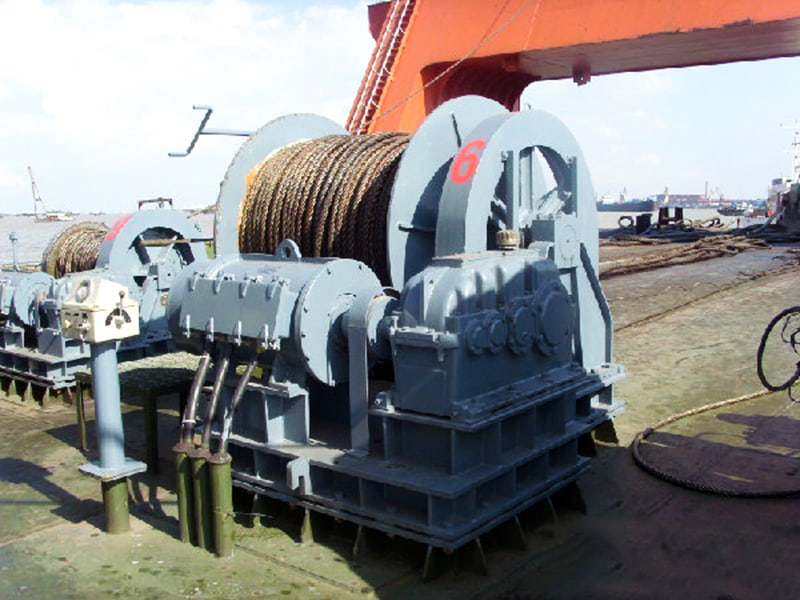 Trailing Suction Hopper Dredger Winch System with High Pull ForceThis winch system for TSHDs delivers 800–1200 kN pulling force and controls drag head movement, suction line tension, and operating depth. Worth reviewing to match duty class against your dredging cycle.View Product →
Function determines duty classification. A drag winch that works for hours across a rocky seabed is not the same equipment as a hopper door winch that opens for twenty seconds at a time. Check the duty class before you compare pull ratings. The winch sets available for TSHD new-builds and retrofits in the 3,000 to 20,000 m³ range follow the patterns in the table above.
Six Selection Criteria That Decide the Right TSHD Winch
Once the duty is confirmed, work through six criteria in order. They apply to every TSHD winch, and the first two will eliminate most unsuitable offers.
1. Line pull and speed
Calculate the rated line pull at the innermost drum layer, not at mid-drum. Add the drag head mass, submerged pipe mass, seabed contact force, and a dynamic factor of at least 1.2 to cover snatching. A drag winch for a 6,500 m³ TSHD is typically rated at 15–20 t at 0.15–0.3 m/s, and the first-layer rating must always be confirmed in writing. If a manufacturer quotes only the outer-layer pull, the motor and brake torque changes by up to 25%, and that is where the hidden risk sits.
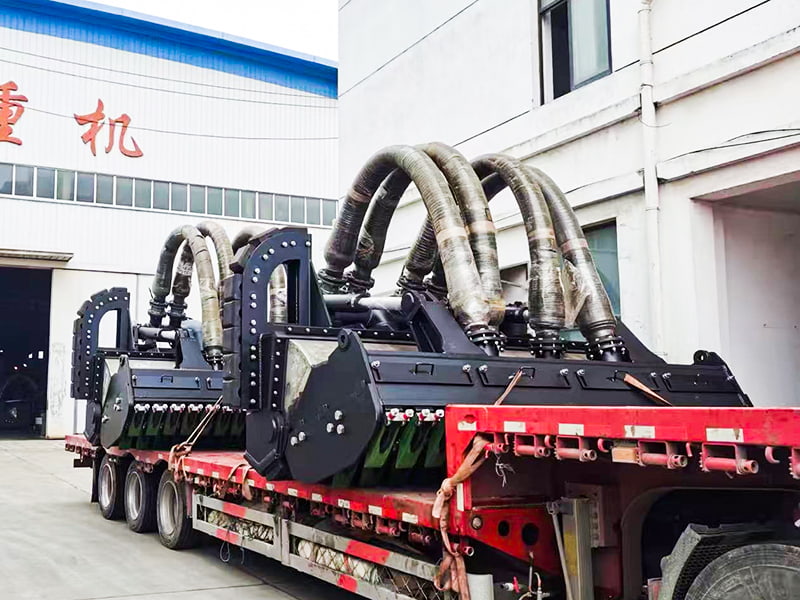 Dredge Draghead for Trailing Suction Hopper DredgersAvailable as universal, California, or active types with replaceable teeth and water jets, fitting 400–1300 mm suction pipes. Relevant for calculating rated line pull and first-layer winch ratings.View Product →
Fig. 1 – Typical drag winch rated line pull by TSHD hopper capacity
Indicative first-layer ratings for new-design drag winches. Confirm each value with the static and dynamic load calculation.
2. Drum capacity and wire rope sizing
The drum must store the maximum lowering length plus five full wraps on the first layer. A typical 6,500 m³ TSHD drag pipe needs 60–90 m of working travel before sheave and drag head allowances are added. Keep the fleet angle within 1.5°; wider angles make the rope ride against the drum flange and collapse the layering. Wire rope diameters between 20 and 32 mm are common for TSHD drag winches, matched to the duty class and to the groove radius of the sheaves.
3. Hydraulic or electric drive
TSHD builders overwhelmingly choose hydraulic direct drive for drag and side wire winches because it gives stall protection if the drag head catches an underwater obstacle, plus infinitely variable speed for pipe positioning. Frequency-controlled electric drives are viable on gantry and hopper door winches, where the load path is short and energy efficiency matters. If the vessel already has a central hydraulic plant, stay with hydraulic; on an all-electric vessel, a standalone hydraulic power pack with an IP56 enclosure is acceptable.
| Criterion | Hydraulic direct drive | Frequency-controlled electric |
|---|---|---|
| Overload behaviour | Stalls at preset pressure; protects the drum and rope | Electronic torque limit; relies on drive settings |
| Speed range | Infinitely variable; smooth at very low speed | Infinitely variable with encoder feedback |
| Reversing | Instant, with no extra components | Instant, but may need a braking resistor |
| Maintenance | Oil conditioning, hoses, seals | Insulation, cooling, and bearing checks |
| Best fit | Drag and side wire winches | Gantry, hopper door, and towing winches |
4. Duty cycle and thermal rating
Duty cycle is the share of time the winch works under load. A typical port dredging job with a 10-minute cycle pushes a drag winch beyond class M5 on ISO 4301. Ask for the FEM/ISO duty rating together with the motor and gearbox thermal capacity. A winch that handles the peak pull but cannot sustain continuous work will overheat within two hours, exactly when charter pressure is highest.
5. Braking, locking, and emergency lowering
Every TSHD winch must have a spring-applied, hydraulically released brake that holds the static load at the drum when the pump is off. The towing winch holding brake should hold the full rated load indefinitely. Specify an emergency lowering function that can pay out the drag pipe under its own weight during a blackout. Brake torque must be calculated at the first drum layer using the rope pull, not the motor torque.
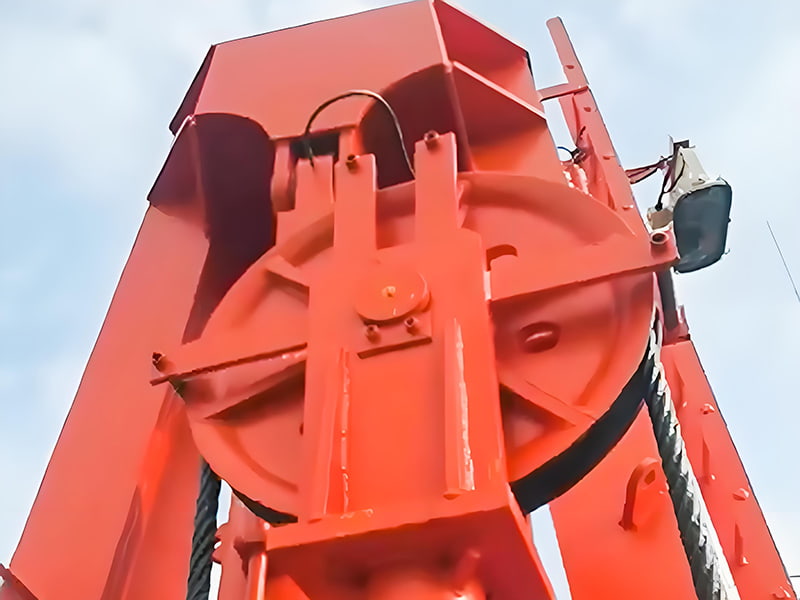 Swell Compensator for TSHD Drag Winch OperationsThis heave compensator offsets vessel motion up to 2–5 meters, holds drag head ground pressure within ±5%, and reduces dynamic loads by 60–80%. Consider it early for open-sea swell operations.View Product →
Where the TSHD works in open-sea swell, the drag winch should be designed to operate with a swell compensator so that pipe tension remains constant as the vessel heaves. Adding the compensator at the design stage is far cheaper than retrofitting it after sea trials reveal surge loads.
6. Corrosion protection
Dredge winches sit in permanent salt spray with sand whipped across every surface. Specify a zinc-rich primer and a two-component polyurethane top coat with minimum dry-film thickness of 240 microns. Use austenitic stainless steel fasteners, marine-grade breathers, and IP56 or higher protection on electrical enclosures. Mount the hydraulic valve block on a separate stainless-steel counter-plate so it can be serviced without draining the entire tank.
The Cost of Getting It Wrong
Selection errors are not theoretical. The most frequent failures repeat across fleets, and each one has a direct cost in downtime. Learn from the list below before you finalise an enquiry.
- Choosing pull at mid-drum instead of the first layer → motor overload and brake drag under full load.
- Ordering a continuous-duty motor when the duty is intermittent → overheating and nuisance shutdowns.
- Ignoring the fleet angle → rope wear and drum flange damage after one season.
- Saving money on the holding brake → inability to hold the pipe in a blackout.
- Forgetting hydraulic cooler capacity → oil temperatures above 80°C in summer operations.
- Using a general-purpose deck winch drum sized for cargo → poor rope layering on the dredge pipe.
These six problems account for most of the repair budget of TSHD winch systems. The split below shows a typical distribution of downtime causes reported by operators.
- Line pull mis-sizing 34%
- Brake and control failure 22%
- Thermal overload 18%
- Corrosion and sealing 14%
- Rope and drum wear 12%
Fig. 2 – Illustrative distribution of reported downtime causes for TSHD winch systems; actual percentages vary by vessel age and maintenance practice.
A Step-by-Step Selection Workflow
Follow this sequence and you will produce a specification that a manufacturer can price and deliver without repeated clarification cycles.
- Determine hopper capacity, maximum pipe length, drag head mass, and overboard depth.
- Calculate the first-layer line pull, speed, and drum capacity required for each winch function.
- Select the duty class for each function according to ISO 4301.
- Choose the drive type and the control interface (joystick, radio remote, or DP interface).
- Verify the holding brake torque, emergency lowering function, and class survey requirements.
- Specify corrosion protection and sealing class in the purchase order, not in the general notes.
- Ask for a calculation report, general arrangement drawing, and bill of materials before ordering.
- Include a workshop load test at 1.1 times the rated pull, with the brake holding test recorded.
Fig. 3 – Typical drag winch line pull profile over one dredging cycle
Indicative load profile showing why a constant-tension drag winch needs a duty class above M5 and a cooler sized for peaks, not averages.
Frequently Asked Questions
How do I size a dredge winch for a TSHD if I do not know the exact drag head mass?
Use the maximum drag head submerged weight, the fully loaded pipe mass, and a dynamic factor of at least 1.2. Ask the manufacturer for a calculation report at the tender stage; a margin of 25% above the calculated value at the innermost drum layer is a safe design target.
Can I use an electric winch for the drag function on a TSHD?
Yes, with a frequency-controlled drive and adequate cooling, but hydraulic drives remain dominant for drag service because of stall protection and predictable overload behaviour. Whichever drive you choose, the fail-safe brake and emergency lowering functions must be the same.
What is the difference between a drag winch and an anchor winch?
A drag winch lowers, holds, and raises the drag head with constant-tension control during dredging. An anchor winch handles mooring anchors with a larger drum and a lower duty rating. They are not interchangeable, and swapping them is a common source of TSHD winch downtime.
How often should a TSHD winch be load tested?
After installation and class survey, a full load test is typical. Thereafter, follow the vessel maintenance schedule with an annual function test, plus a full load test after any suspected overload event or major brake repair.
A winch that is correctly specified for a TSHD pays for itself in one operating season because it never becomes the reason a dredger waits at anchor. Start with the duty, keep the six criteria in order, and insist on a calculation report before you sign. If you need a second opinion on an existing specification, send the parameters from this article to our engineering team. Before you commit to a supplier, look at the delivery records of comparable TSHD components; that is the level of evidence your purchase order should require.

Copyright 2025 Taizhou Sanyang Heavy Machinery Co., Ltd. All Rights Reserved Professional Dredging Equipment Manufacturer

Back To Top