
 English
 中文简体
中文简体
What pressure ratings are available for dredger swivel joints?
Content
- 1 Standard Pressure Classes at a Glance
- 2 What the Joint Actually Does on a Working Dredger
- 3 Gland Type vs Bolted Type: Which Connection Fits
- 4 Matching Diameter, Angle and Pressure
- 5 Dredger Spare Parts That Work Alongside the Swivel Joint
- 6 Where Pressure Class Matters Most on Each Dredger Type
- 7 Materials, Sealing and Wear Life
- 8 Working With a Dredger Equipment Supplier
Dredger swivel joints, also sold as dredge ball joints, are typically built in five duty classes: 1 MPa, 1.5 MPa, 2 MPa, 2.5 MPa, and 3 MPa and above (roughly 10, 15, 20, 25, and 30-plus bar). Manufacturers such as Sanyang Machinery pair each pressure class with a fixed pipe diameter range, from DN400 up to DN1200, and a tilting angle of 15 degrees or 18 degrees, sometimes extended to 22.5 degrees on other market designs. The right class depends on pump discharge head, pipe diameter, and where the joint sits along the dredging pipeline.
Standard Pressure Classes at a Glance
Dredge ball joints are graded in steps rather than as one continuous rating, because the ball, gland, and liner all need to be sized for a specific working pressure. The table below lines up the metric class with the bar and psi figures engineers usually ask for when specifying dredger spare parts.
| Pressure Class | Approx. Bar | Approx. PSI | Typical Use |
| 1 MPa | 10 bar | 145 psi | Floating discharge line, light duty |
| 1.5 MPa | 15 bar | 218 psi | Medium-length discharge pipeline |
| 2 MPa | 20 bar | 290 psi | Standard cutter suction dredger duty |
| 2.5 MPa | 25 bar | 363 psi | Long-distance pumping, higher pump head |
| 3 MPa and above | 30 bar+ | 435 psi+ | Heavy-duty and booster station applications |
Some suppliers extend the top end further, into the 35-45 bar range, for booster pump stations or very long discharge runs. If your project pipeline exceeds three kilometers, or you run a two-stage pump setup, ask your dredger equipment supplier to confirm the pressure at the joint location itself, not just the pump outlet figure.
What the Joint Actually Does on a Working Dredger
A dredger swivel joint connects two sections of the slurry discharge pipeline while letting them move relative to each other. On a cutter suction dredger, the pipeline runs from the cutter suction assembly near the cutter head, through the ladder, and out along a floating or shore pipeline that may sit on pontoons rocked by waves and current. Without a joint that can tilt, every wave motion would transmit stress straight into welded pipe joints.
The ball itself is welded into the pipe run on both sides, so the sand-and-water mixture never touches the outer casing. A retaining ring, secured by heavy lugs and a locking pin, holds the ball inside its housing while still letting it rotate and tilt. A replaceable liner absorbs wear from the moving slurry, so the housing itself rarely needs replacement over the working life of the dredger.
On a trailing suction hopper dredger, a related fitting called a cardanic joint or turning gland performs a similar role between the drag arm and the hull, letting the TSHD drag arm swing and follow the seabed while the drag head and drag teeth do the cutting.
Gland Type vs Bolted Type: Which Connection Fits
Sanyang and most other dredge spare parts manufacturers offer two mounting approaches for the same ball-and-socket principle.
| Feature | Gland Type | Bolted / Flanged Type |
| Assembly | Quick-turn retaining ring, no bolts | Bolted flange around the socket |
| Disassembly speed | Fast, suited to frequent line changes | Slower, but very secure long term |
| Best fit | Floating pipeline sections moved often | Fixed sections near the pump or shore line |
| Sealing | One-piece moulded gasket | Flange gasket, bolt-torqued |
Both styles are offered welded or flanged onto the adjoining pipe, and both can be built to the same pressure classes listed above; the choice usually comes down to how often the pipeline is reconfigured rather than the duty itself.
Matching Diameter, Angle and Pressure
Pressure rating does not exist on its own. A DN1200 joint rated at 1 MPa and a DN400 joint rated at 3 MPa are both legitimate designs, they simply serve very different points on the pipeline. The general pattern across the industry looks like this.
| Internal Diameter | Common Tilt Angle | Typical Pressure Range |
| DN400 - DN600 | 15° - 18° | 1 MPa - 2.5 MPa |
| DN700 - DN900 | 15° - 18°, up to 22.5° on request | 1.5 MPa - 3 MPa |
| DN1000 - DN1200 | 15° - 18° | 2 MPa - 3 MPa and above |
Larger internal diameters generally see lower peak pressure at a given pump curve, because velocity drops as bore increases, but they also carry more mass and more side load when the floating pipeline shifts. That is why manufacturers still test the full range on every size rather than assuming pressure scales down automatically with diameter.
Dredger Spare Parts That Work Alongside the Swivel Joint
A swivel joint rarely works in isolation. It sits inside a wider set of dredger spare parts that carry the same slurry, the same pressure, and the same wear conditions, so it helps to see how the joint relates to the rest of the pipeline and cutting system.
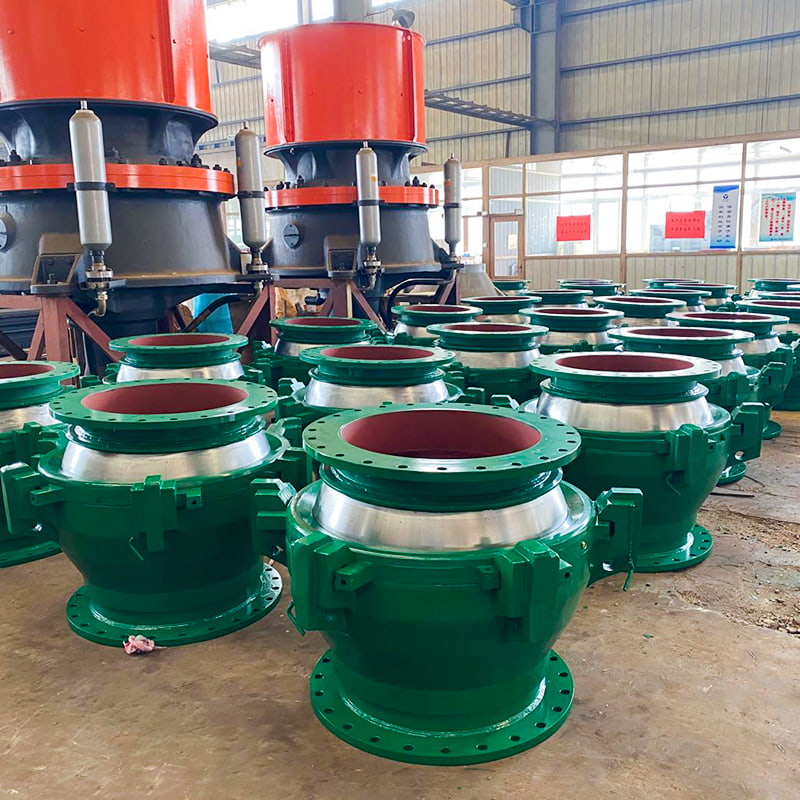
Ball Joint
Swivel / Pipeline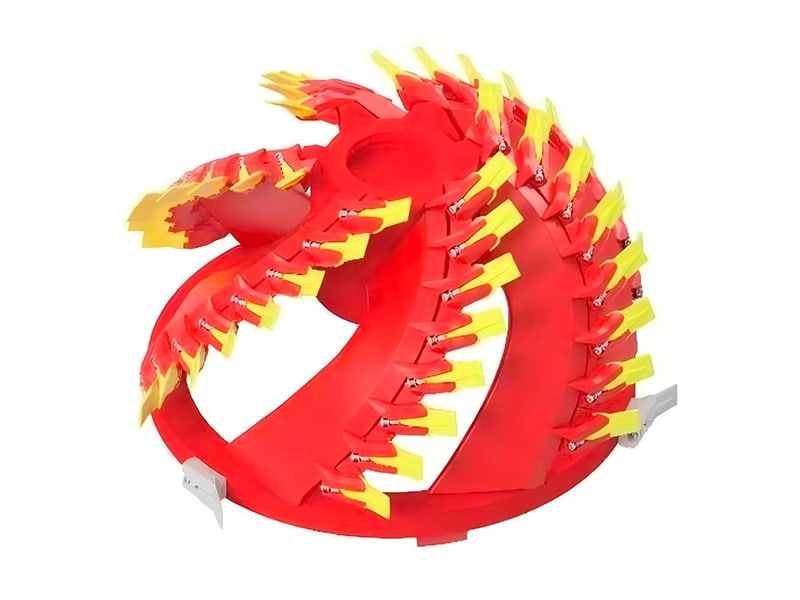
Dredge Cutter Head
Cutter Suction Dredger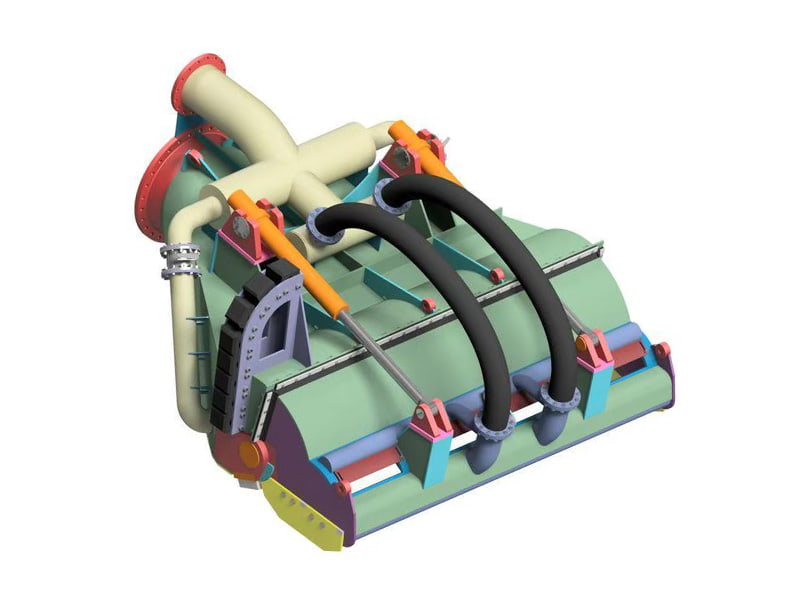
Drag Head
TSHD Drag Arm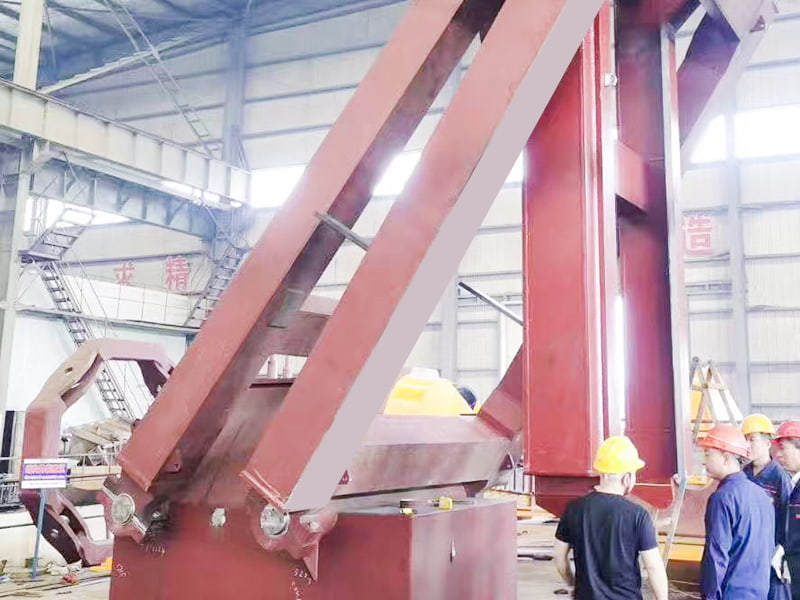
Gantry
Hopper Dredger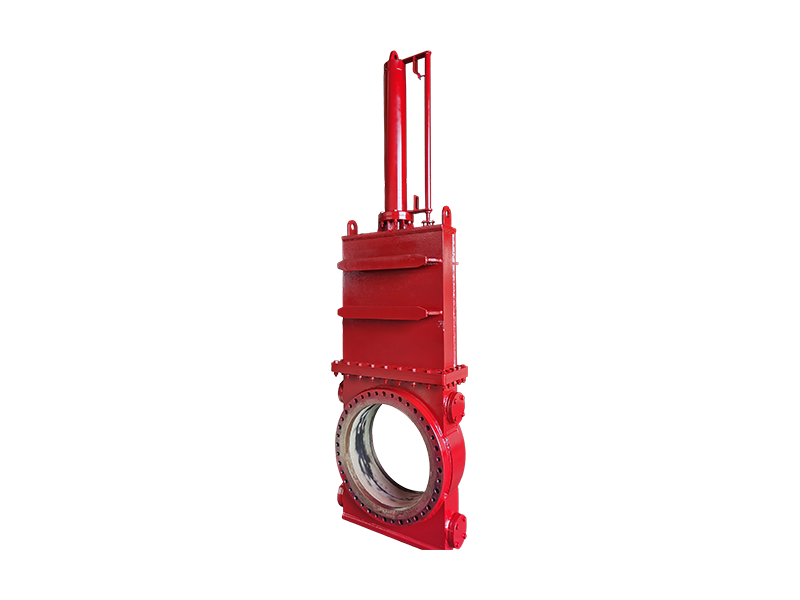
Gate Valve
Pipeline ControlWhere Pressure Class Matters Most on Each Dredger Type
On a cutter suction dredger, the joint closest to the pump outlet, right after the cutter suction drive, sees the highest pressure in the whole system, so it is usually specified at 2.5 MPa or above even when the rest of the floating line runs at 1.5 MPa. Downstream joints along the shore pipeline can often step down a class, provided the pump curve and pipeline length are confirmed.
On a trailing suction hopper dredger, the layout is different: pressure at the drag arm and drag head is driven by suction rather than discharge, while the higher discharge pressure appears again near the hopper door and bottom door, and at the overflow pipe outlet during loading. Spud carriers, spud holders and the gantry structure do not see line pressure directly, but they do carry the mechanical load of positioning the pipeline, so their sizing should be checked alongside the joint schedule rather than in isolation.
A dredger gate valve installed just upstream or downstream of a swivel joint should always match or exceed the joint's pressure class, since an undersized valve becomes the weak point in the line regardless of how well the joint itself is rated.
Materials, Sealing and Wear Life
Because the ball and case liner see continuous abrasive flow, pressure rating and wear life are linked in practice. A joint pushed above its rated pressure wears its liner faster, and a worn liner in turn drops the effective sealing pressure the joint can hold. Cast steel or high-manganese wear-resistant casings are common at the higher end of the range, together with a replaceable liner that can be swapped without recasting the whole housing. Grease grooves on the ball face keep friction low enough that the joint can still rotate freely under full rated pressure, rather than seizing as the liner wears.
Quality control on higher pressure classes typically includes chemical composition testing, ultrasonic and magnetic particle testing on critical surfaces, and a full assembly and locking test before the joint ships. Ask for these records whenever you are buying a joint rated 2.5 MPa or above, since that is the class most often used on long or high-head pipelines where a failure is costliest to fix.
Working With a Dredger Equipment Supplier
A dredge spare parts manufacturer that builds ball joints alongside the rest of the pipeline, including cutter teeth, cutter shaft assemblies, overflow ducts and dredger gate valves, can usually match the joint's pressure class to your actual pump curve rather than selling a generic size. Some suppliers, including Sanyang, also produce marine propeller shaft, stern shaft, rudder shaft and full rudder system components for the propulsion side of the vessel, along with cold bending machine capacity for custom pipe sections, which is worth knowing if you are sourcing a full refit rather than a single spare part.
When requesting a quote, give the supplier the pump discharge pressure at the joint location, the pipe diameter, and whether the joint sits on a floating, shore, or fixed section of line. That combination, more than the pressure figure alone, is what determines whether a 1 MPa gland-type joint or a 3 MPa bolted joint is the correct part for the position.

Copyright 2025 Taizhou Sanyang Heavy Machinery Co., Ltd. All Rights Reserved Professional Dredging Equipment Manufacturer

Back To Top