
 English
 中文简体
中文简体
Dredger Bridge Pulley Block Maintenance: Wear Limits, Greasing & Schedules
Content
A cutter suction dredger is twenty minutes into a night shift when the winch operator hears a rhythmic knock from the bridge pulley block. The crew stops the pump and finds the damage in two minutes: the rope has jumped the sheave groove once, one bearing is running hot, and grit is packed around the seal lip. The block comes off the ladder, the dredging window is gone, and the repair lands somewhere between a planned sheave change and an unplanned rope replacement.
That sequence is avoidable. The highest-return maintenance action on a dredger bridge pulley block is not a rebuild. It is a five-minute pre-shift check of sheave rotation, rope seating and grease condition, backed by a bearing inspection at every 500 operating hours and a documented re-torque whenever a wire rope is renewed.
This article covers what actually wears out on these blocks, the limits worth writing into your maintenance log, and a schedule that fits around dredging shifts instead of interrupting them. If you need to see where the block sits in the machine first, this overview of cutter suction dredger components is a useful starting point.
What Fails First on a Bridge Pulley Block
Failures cluster. On ladder-mounted blocks, four modes account for nearly every unplanned stop: sheave groove wear, bearing or bushing seizure, rope misalignment at the point of entry, and corrosion of pins, shafts and fasteners. Cracked frames, bent pins and sheared keys usually begin as one of those four and get worse because nobody is looking.
Where the failures come from
- Sheave groove wear 38%
- Bearing seizure 24%
- Rope misalignment 18%
- Corrosion, slurry ingress 12%
- Frame and pin damage 8%
Groove wear is the quiet one. A slurry-loaded rope works like a grinding wheel, and a groove that has opened by a millimetre or two stops supporting the rope properly. Contact pressure climbs on the flanks, the rope beds deeper, and both the sheave and the rope degrade faster. Bearing seizure is louder: it announces itself as heat, noise and a stiff sheave long before it locks up, which is exactly why hand rotation is worth ten seconds of every shift.
| Check | Tool | Typical limit | Action |
|---|---|---|---|
| Sheave groove wear | Groove template or depth gauge | More than 1.0 to 1.5 mm of wear, or the rope sitting below the groove shoulder | Re-machine or replace the sheave |
| Sheave rotation | Hand rotation with rope slack | Roughness, grinding noise or visible radial play | Replace bearing or bushing |
| Pin and shaft diameter | Outside micrometer | More than 2 percent below nominal, or any step or scoring | Replace pin or shaft |
| Fastener torque | Torque wrench | Outside plus or minus 10 percent of the drawing value | Re-torque and mark |
| Rope diameter | Micrometer across a 6d length | 10 percent reduction from nominal on six-strand ropes | Replace the rope |
| Sheave alignment | Straight edge and feeler gauge | Grooves more than about 1 mm out of line | Re-shim the block |
Two habits keep these numbers in range. First, measure instead of guessing: a groove template, an outside micrometer and a torque wrench cost less than one lost production shift. Second, log every reading against operating hours. A groove that opens 0.3 mm per 500 hours is telling you about rope tension or alignment, not just about the sheave.
Pre-Shift and 250-Hour Checks
Most of the failures above give days of warning. Check in the right order and the routine costs minutes, not hours.
- Rotate each sheave by hand with the rope slack, listening for roughness and feeling for play.
- Confirm the rope sits in the groove bottom and never touches the flanges.
- Read the grease line: fresh grease at the seal lip means the seal is holding; dry or gritty grease means water and fines are getting in.
- Look for missing fasteners and for rust streaks around pins and covers, which usually mark a moving interface.
- Scan the rope length that runs over the block for kinks, birdcaging and flattened sections.
- Record sheave temperature after the first hour of running, then compare it against the previous shift.
At 250 hours, add a rope diameter measurement across a 6d length and a groove check with a template, then rinse the block with fresh water and re-grease. Write the numbers down. A single reading says very little; a trend says almost everything.
Lubrication, Sealing and Slurry Ingress
Grease is cheap; a seized sheave inside a dredging campaign is not. Use a water-resistant EP grease, NLGI 2 for most ladder blocks, and purge until clean grease appears at the seal lip, then stop. Over-greasing is what pushes seals out of their seats and lets slurry in.
- Rinse the block with fresh water at the end of every shift in brackish or salt water, especially around the seal area.
- Grease after washing, not before, so the purge carries moisture out rather than trapping it.
- Purge by hand. A block that only turns a few degrees per stroke will never clean itself through normal running.
Seals and cover plates deserve the same attention as bearings. A cut seal lip or a pitted cover plate puts water and fines into the bearing race within days. Replace the seal during the same shutdown as the bearing, or the new bearing will not last a month.
Rope Tension, Fleet Angle and Alignment
Misalignment shows up as uneven groove wear, rope damage on one flank and heat on one side of the block. Three checks cover most of it: keep the rope entering the sheave within roughly 1.5 degrees of the groove plane, keep adjacent grooves within about 1 mm of each other, and keep parallel falls tensioned within about 10 percent of one another. Uneven fall tension can double the load carried by a single rope and a single sheave.
On ladder-mounted blocks, also inspect the mounting bracket. Flexing ladders work bolts loose and fatigue shim stacks, and a bracket that has shifted a few millimetres will cut a fresh wear pattern in weeks. Re-shim and re-torque to the drawing values, then re-check after the first shift.
A Practical Maintenance Schedule
For a two-shift dredging operation, a workable bridge pulley block schedule looks like this.
| Interval | Main tasks | Typical downtime |
|---|---|---|
| Pre-shift (daily) | Hand rotation, rope seating, grease condition, fastener check | 5 to 10 minutes |
| 250 hours | Rope diameter measurement, groove template check, rinse and re-grease | About 30 minutes |
| 500 to 750 hours | Bearing temperature and play check, pin and bush inspection, torque check | 2 to 4 hours |
| 1500 hours | Sheave and bearing replacement if limits are reached, seal renewal, full re-torque | 8 to 12 hours, planned |
| Class survey or annual | Non-destructive testing of pins and frame, alignment survey, rope replacement decision | 1 to 2 days |
The economics are straightforward. The stage at which a defect is found decides the final cost far more than the quality of the repair:
Relative repair cost by detection stage, with a daily check set at 1x. Indicative figures from service experience.
A planned 1500-hour service costs a fraction of a run-to-failure repair, and it can be slotted into a maintenance window instead of eating into an active dredging campaign.
Spares Planning: Repair or Replace?
Repair or replace usually comes down to the sheave rather than the block. Re-machining a lightly worn groove is normal practice when the sheave still has wall thickness and the profile can be restored to suit the rope diameter. Once the groove falls below the minimum profile, or the sheave bore is worn, replacement is the cheaper route. Otherwise you will simply be replacing ropes twice as often.
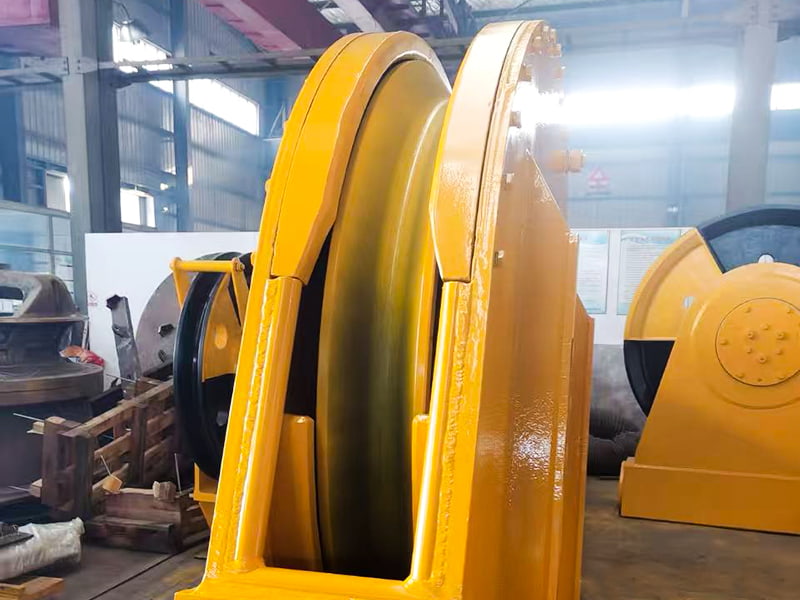 Bridge Pulley Block for Cutter Suction DredgersCutter suction dredger component for guiding cables and transmitting power; consider it when assessing sheave wear and critical spares.View Product →
Hold a small critical spares set per dredger: one sheave set, one bearing and seal kit, and one spare pin per block type. The same logic applies to other sheave blocks on the vessel, including the side wire blocks fitted to trailing suction hopper dredgers, which face comparable slurry and salt exposure and the same groove wear pattern.
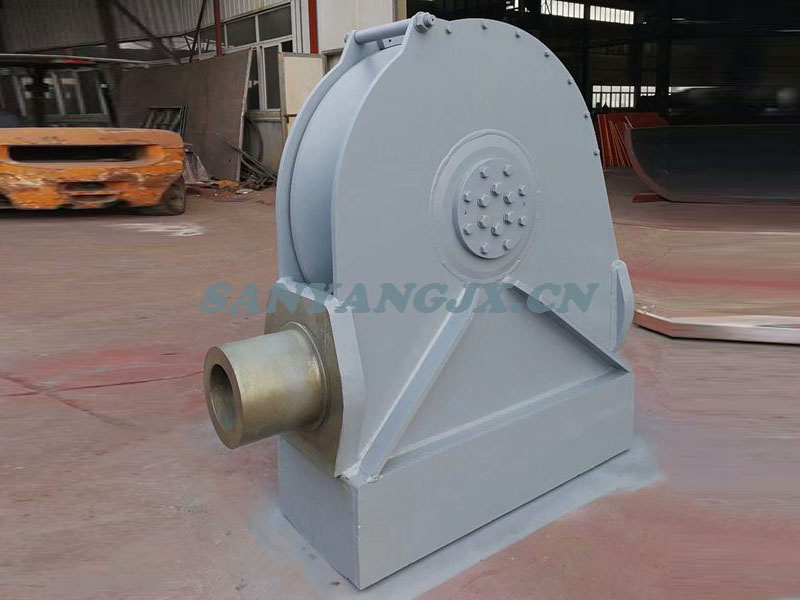 Horizontal Sliding Pulley for Dredger Cable GuidingCable-guiding load-bearing pulley for dredger sliding and swinging; useful when planning side wire spares and reviewing sheave profiles.View Product →
If you are deciding which spares to keep for a specific ladder or side wire arrangement, our engineering team can review the drawing with you and confirm sheave profiles, groove tolerances and material options before you commit to a stock list.
Frequently Asked Questions
How often should a dredger bridge pulley block be greased?
Purge every grease point at least once per shift in sandy or brackish conditions, and again after any wash-down. If clean grease is still coming out at the seal after two strokes, the interval can be extended for that particular point.
What is an acceptable sheave groove wear limit?
Most builders treat 1.0 to 1.5 mm of radial groove wear as the practical limit, along with the rope no longer sitting fully supported in the groove. Confirm the exact figure on the OEM drawing, because rope construction and groove profile both shift the number.
Can a worn sheave be re-machined instead of replaced?
Yes, if enough wall thickness remains and the groove can be cut back to the correct profile and diameter. Once re-machining would push the sheave below its minimum section, replacement is the only safe option.
How do I tell whether noise comes from the bearing or the rope?
Slack the rope and rotate the sheave by hand. If the roughness stays, it is the bearing or bushing. If the sheave runs smooth but the knock returns under load, look at rope condition, fleet angle and fall tension instead.
Bridge pulley block maintenance rewards routine rather than skill: ten seconds of hand rotation per shift, honest measurements recorded against operating hours, and a planned 1500-hour service that replaces what is worn before it takes the rope with it. Blocks that are looked at every shift rarely stop a dredging campaign.

Copyright 2025 Taizhou Sanyang Heavy Machinery Co., Ltd. All Rights Reserved Professional Dredging Equipment Manufacturer

Back To Top