
 English
 中文简体
中文简体
Dredger Hopper Door Types: Bottom Doors, Conical Valves and Split-Hull Discharge
Content
- 1 Hopper Door Types at a Glance
- 2 Bottom Doors and Flap Doors: Speed With a Sealing Bill
- 3 Conical Valves and Mushroom Valves: Control for Cohesive Soil
- 4 Split-Hull Dredgers: When There Is No Door at All
- 5 Self-Emptying Doors, Sliding Gates and Overflow Interfaces
- 6 Comparing Hopper Door Types Side by Side
- 7 What to Put in the Specification Before You Order
- 8 Frequently Asked Questions
A 6,000 m3 trailing suction hopper dredger working stiff clay in a shallow reclamation area will block a row of small bottom doors long before it wears them out. Put the same hull on free-flowing sand in deep water and large flap doors empty the hopper in well under a minute with almost no attention. The door type decides the discharge cycle, the structure around the hopper, and how much maintenance your crew signs up for.
The short answer: most hopper dredgers discharge through one of four arrangements - hinged bottom doors, conical or mushroom valves, a split hull with no doors at all, or a single self-emptying door. Sliding gates and gate valves usually appear as isolating elements rather than the main discharge path. The sections below explain how those types behave in service, where each one fails, and what belongs in a purchase specification. If you want the wider context first, this overview of what dredging equipment covers is a reasonable starting point.
Hopper Door Types at a Glance
Each type solves a different combination of soil, disposal site and hull geometry, so it helps to keep the map in view before the detail.
- Bottom (flap) doors - hinged plates in the hopper floor, normally arranged in pairs and opened by hydraulic cylinders. Fast discharge, simple geometry, heavy seal wear.
- Conical or mushroom valves - a plug drawn up into a machined seat, one per opening. Slower but controllable, and kinder to cohesive soil that refuses to flow.
- Split-hull discharge - the hull itself opens along the centreline, hinged at deck level. No doors and no seals, but a very different structural and docking story.
- Self-emptying doors - one large opening at the low end of a sloped hopper floor, with gravity doing most of the work.
- Sliding gates and gate valves - linear or rising gates used for isolation, trimming and small hoppers rather than bulk dumping.
The design question is rarely which type is best in the abstract. It is which type keeps cycle time short for this soil, at this disposal depth, without putting the hull at risk.
Bottom Doors and Flap Doors: Speed With a Sealing Bill
A bottom door is a hinged flap set into the hopper floor. It swings down and outward as the cylinder extends, so spoil falls straight out of the hull. On a typical trailing suction hopper dredger you will find anything from four to a dozen doors per hopper, paired left and right so the load leaves evenly and the vessel does not develop a list mid-discharge.
The advantages are real: discharge measured in seconds to a couple of minutes, no mechanism standing above the cargo, and easy inspection from a workboat. The costs are equally real. Every opening interrupts the bottom shell and the framing around it, which is why classification rules single out hopper-type dredgers for structural continuity review. Each door also needs a sealing face that survives abrasive sand, plus hinge pins, cylinder mounts, sea-passage locking and position feedback on the bridge.
Choose flap doors when the material is granular or soft, disposal happens in reasonably deep water, and cycle time dominates the commercial case. Think harder when the spoil is sticky clay, when partial discharge is routine, or when the hull depth leaves little room for hinge and cylinder maintenance.
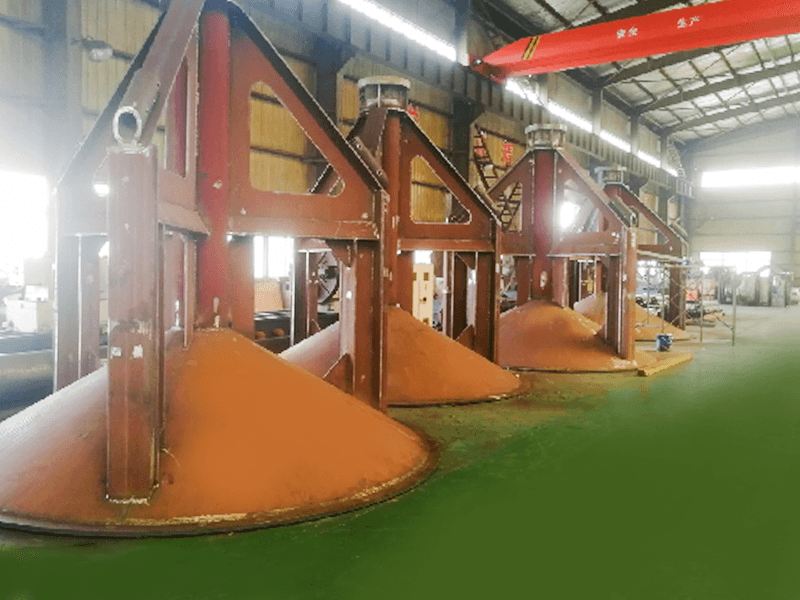 Dredger Hopper Door for Trailing Suction Hopper DredgersControls dredged material flow and sealing in trailing suction hopper systems, with emergency shutoff for equipment and personnel safety.View Product →
Conical Valves and Mushroom Valves: Control for Cohesive Soil
A conical valve replaces the flap with a plug that seats in a machined cone in the hopper floor. The cylinder pulls the plug upward into the hopper, so the motion is vertical and the discharge can be throttled. Mushroom valves work on the same principle with a flatter head, and both are common where dredged material tends to bridge over a plain opening.
The practical differences from flap doors are worth stating plainly: finer control of discharge rate, the option to spread material along a placement line, and a mechanism less exposed to impact from the sea bed. Against that, each valve needs vertical clearance inside the hopper for the plug and spindle, the seat has to be machined and protected, and a jammed valve is harder to clear than a flap you can push open from outside.
Valves suit clay, silty clay and mixed material, and they suit projects where placement accuracy matters more than the last few minutes of cycle time. On smaller hoppers and on dredgers that also work in confined water, gate valves are often fitted on the same discharge line for isolation and maintenance access.
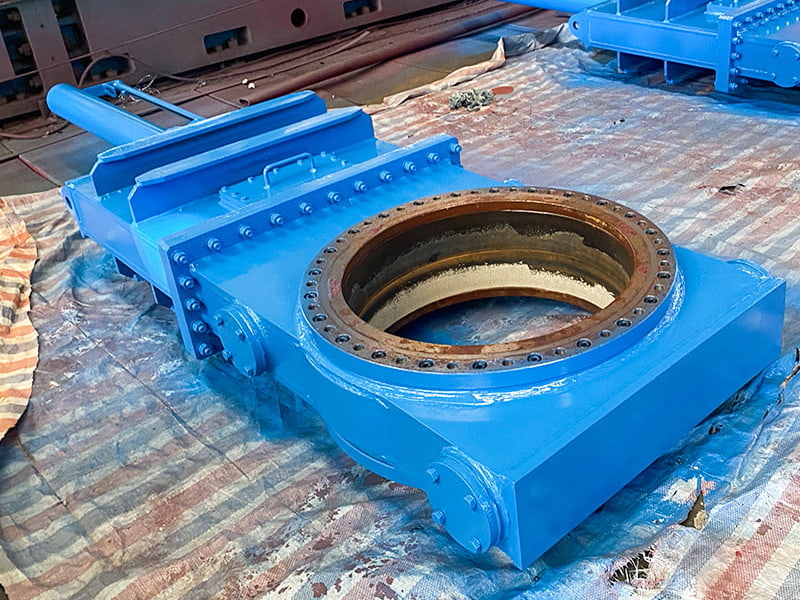 Wear-Resistant Dredge Gate Valve for Cutter and Hopper DredgersControls water and sand flow in dredge suction and discharge pipes; DN 400–1200 mm, up to 25 bar, with wear-resistant seals and flushing.View Product →
Split-Hull Dredgers: When There Is No Door at All
A split-hull hopper dredger carries no discharge doors. The hull is divided along the centreline and hinged at deck level; hydraulic rams swing the two halves apart and the spoil falls out from underneath. Discharge is fast and the opening is enormous, which makes the type useful for stiff material and for placing spoil in shallow or confined areas where a dredger cannot stay on station for long.
The trade-offs sit in the structure and the dockyard. Hinges, closing-face seals and the longitudinal strength of a hull that opens in service all demand careful design and a fixed maintenance interval. Dry docking for hinge and seal work is a planning item rather than an emergency repair, and split-hull arrangements are less common in the very large hopper sizes where doors or valves carry the volume more economically.
Self-Emptying Doors, Sliding Gates and Overflow Interfaces
Self-emptying hoppers slope the floor toward one large door, usually at the aft end. Gravity and the vessel's trim do most of the work, so the mechanism is simpler than a row of flap doors and there are fewer seals to maintain. The compromise is discharge time and dependence on trim: if the ship cannot be brought to the right attitude, part of the load stays behind.
Sliding gates and gate valves are generally not the main discharge path. They isolate sections of the discharge line, control flow to the shore pump, or act as the closing element on small hoppers. Overflow ducts and expansion compensators work alongside the doors, and the relationship between overflow level and door sill is one of the details most often underestimated in a new build or a conversion.
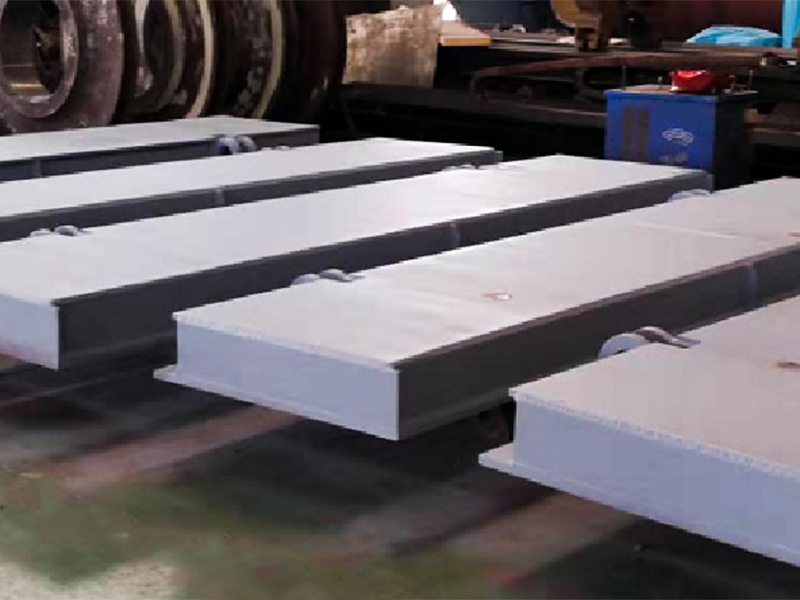 Self-Emptying Suction Door for Trailing Suction Hopper DredgersHydraulically driven door at the mud tank bottom, enabling rapid gravity discharge of sediment with a tilted, wear-resistant structure.View Product →
Comparing Hopper Door Types Side by Side
The table below maps the main families against the points that usually decide a specification. Treat it as a filter rather than a ranking.
| Door type | Actuation | Typical discharge | Best suited to | Main risk |
|---|---|---|---|---|
| Bottom (flap) doors | Hinged flap, hydraulic cylinders | Seconds to about two minutes | Sand, silt, deep-water disposal | Seal wear, hull openings |
| Conical or mushroom valves | Plug drawn up into a machined seat | Controlled, slower than flaps | Clay, cohesive and mixed soil | Blockage, clearance above the valve |
| Split hull | Rams splitting two hull halves | Fast, very wide opening | Shallow or confined placement | Hinge and seal maintenance, docking |
| Self-emptying door | One large door, gravity assisted | Slow, trim dependent | Cohesive soil, small to medium hoppers | Residual load if trim is wrong |
| Sliding gates and gate valves | Linear or rising drive | Slow, used for isolation | Discharge lines, small hoppers | Guide wear, jamming with grit |
What to Put in the Specification Before You Order
Door type is a decision, not a drawing. Once it is fixed, the specification should carry enough data for the workshop to hold tolerances and for the classification society to review the openings.
- Soil range and target cycle: grain size distribution, clay content, and the discharge time the project actually needs.
- Opening geometry: number of doors or valves, clear opening area per unit, and sill height relative to the hopper floor.
- Sealing principle: rubber gasket, metal-to-metal seat or a combination, with compression and flatness tolerances stated in millimetres.
- Actuation: cylinder bore, stroke, working pressure, redundancy per door, and the manual or emergency opening provision.
- Locking and indication: sea-passage locking, limit switches, and position feedback in the wheelhouse or engine control room.
- Materials and wear protection: plate grade, liner thickness at seat and hinge, and the corrosion protection system.
- Approval path: class notation, structural continuity review of the hopper openings, and material certificates required at delivery.
Frequently Asked Questions
How many doors does a hopper dredger usually have?
Small and medium hoppers commonly carry four to eight doors, larger vessels more, arranged in pairs so both sides discharge evenly. The count follows hopper length and the opening area needed to empty within the target time.
Can bottom doors be opened partially?
They can, but a partly open flap is exposed to the sea and to impact, so partial discharge is normally brief and at reduced speed. Where controlled placement is a routine requirement, conical valves are the better choice.
What causes hopper door leakage?
Most leaks start at the seal rather than the hinge. Abrasive sand cuts rubber gaskets, scale and grit sit on the seating face, or the door is closed on a lump of spoil. Cleaning the seat before closing and replacing gaskets on schedule removes most of the problem.
Hopper door type looks like a technical detail and turns out to be a commercial one: it sets cycle time, docking intervals and the structural review your classification society will run. Taizhou Sanyang Heavy Machinery manufactures trailing suction hopper dredger components including hopper doors, self-emptying doors and gate valves under CCS ISO 9001-2015 quality management, with workshop approvals from CCS, BV, ABS and RINA and parts delivered to projects in more than 20 countries.
If you are weighing flap doors against valves for a specific soil and disposal site, send the hopper general arrangement and the expected cycle to our engineering team and we will come back with an opening layout and sealing detail for review.

Copyright 2025 Taizhou Sanyang Heavy Machinery Co., Ltd. All Rights Reserved Professional Dredging Equipment Manufacturer

Back To Top