English
 中文简体

Port dredging project equipment demand is decided by four things: the dredging method, the material being cut, the dredger fleet already in the water, and the wear life of every part that touches the seabed. Projects rarely buy "a dredger" as one item. They buy a chain of components that has to fit together — a cutting tool or suction head at one end, a spud or drag system to hold position, and a pipeline or hopper to move the spoil away.
Two definitions keep planning honest. Capital demand is the one-off assembly purchase that arrives with a channel deepening, a new berth or a vessel conversion. Consumable demand is the scheduled replacement of teeth, bushes, liners, bends, glands and seals, and it continues for the whole service life of the dredger whether or not a new contract is signed.
In practice the split looks like this:
- Deepening or a new berth: cutter head and cutter drive assembly, dredge arm and bow coupling, spud installation, drag head, drag pipe and cardanic joint, gantry, hopper doors and dredger winches.
- Maintenance dredging: cutting teeth, wear plates, suction bends with arm pieces, swivel bends, turning glands and swell compensators.
- Conversion or life extension: propeller shaft assemblies, rudder assemblies, hatch covers, rudder-slurry installation platforms and cold bending machines for the yard phase.
Four conditions that decide the size of the equipment package
The equipment package follows ground conditions rather than the budget line: sediment decides the cutting tool, depth and volume decide the size of the assembly, and the working environment decides how much position-keeping hardware the project needs.
A port authority planning a modest 1 m deepening over a wide channel is buying production hours, but the contractor who wins that work is buying wear parts at a rate set by the abrasiveness of the sand. That is why two projects of similar value can generate completely different equipment orders.
| Project condition | What it changes | Items usually budgeted |
|---|---|---|
| Soft silt and sand | Suction-dominated cutting, high throughput, fast wear on flow parts | Drag head, drag pipe, suction bend, pump liners, overflow duct |
| Stiff clay, compacted sand, rock | Cutting torque and tooth loading rise sharply | Cutter head, cutter drive assembly, cutting teeth, dredge arm, spud system |
| Depth and layer thickness | Longer ladder or drag string, higher swing loads at the bow | Dredge arm pieces, bow coupling or bow connection, side-wire blocks |
| Open channel, currents, traffic | Position-keeping and mooring hardware become the constraint | Spud installation, side-wire blocks, dredger winches, gantry |
| Disposal or reclamation method | Decides whether spoil goes to a hopper, a pipeline or a reclamation area | Hopper doors, self-emptying door, gate valve, overflow duct, swell compensator |
Watch where the demand migrates. When a contractor moves from maintenance work into capital work, the spend shifts from teeth and liners towards complete assemblies, machining capacity and class-approved documentation. Suppliers who can cover both ends of that shift are worth keeping on a short list.
Cutter suction or trailing suction hopper: match the type before the parts
Match the dredger type to the material first and to site logistics second: confined berth pockets in clay, compacted sand or rock point to a cutter suction dredger, while soft silt and sand in an open approach channel point to a trailing suction hopper dredger.
| Aspect | Cutter suction dredger | Trailing suction hopper dredger |
|---|---|---|
| Material range | Clay, compacted sand, soft rock | Silt, fine to medium sand |
| Position keeping | Spud system, side wires, cutter ladder | Drag head on the seabed, ship speed and drag wire |
| Spoil route | Pipeline or booster station to the reclamation area | Loaded into the hopper, discharged through doors or valves |
| High-wear items | Cutting teeth, cutter head, suction bend, arm pieces | Drag head lip, drag pipe, cardanic joint, turning gland |
| Typical port use | Berth pockets, quay walls, hard spots in the channel | Channel maintenance, entrance channels, sand bypass |
On the cutter suction side, demand concentrates at the cutting end and along the ladder. A cutter head that is matched to the ground — tooth spacing, opening area, wear protection — sets the production rate for the whole spread, and everything downstream is sized around it.
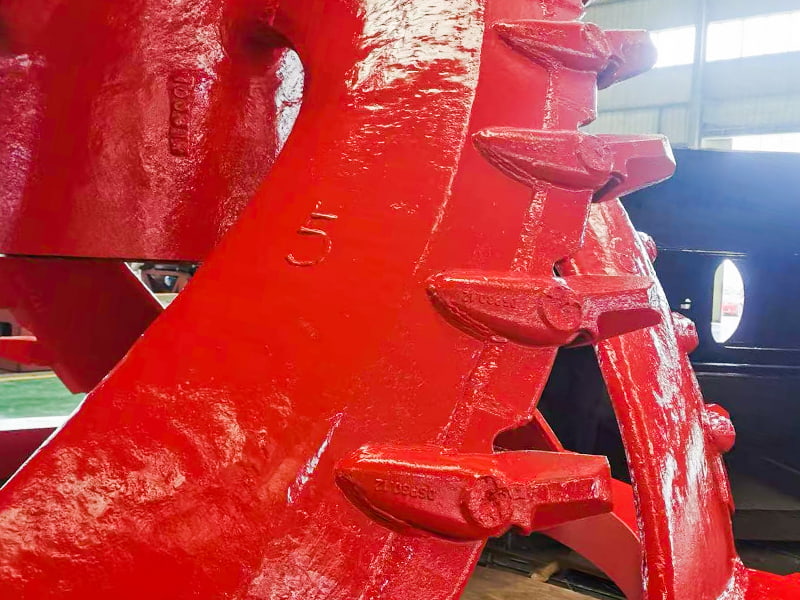 Cutter heads for cutter suction dredgersA cutting-end component for cutter suction dredgers, available with replaceable teeth and options to suit different ground conditions.View Product →
Behind the head sit the components that carry the load: dredge arm pieces, the bow coupling that joins the ladder to the floating line, the swivel bend that lets the pipeline follow the swing, and the spud installation that holds the dredger on station. These are non-standard, drawing-driven parts, and they only perform if the interface dimensions match the original design.
On the hopper side the demand profile is different. The drag head does the cutting work while the vessel moves, so the wear concentrates on the lip, the screen and the suction mouth, and the drag pipe and cardanic joint absorb constant flexing.
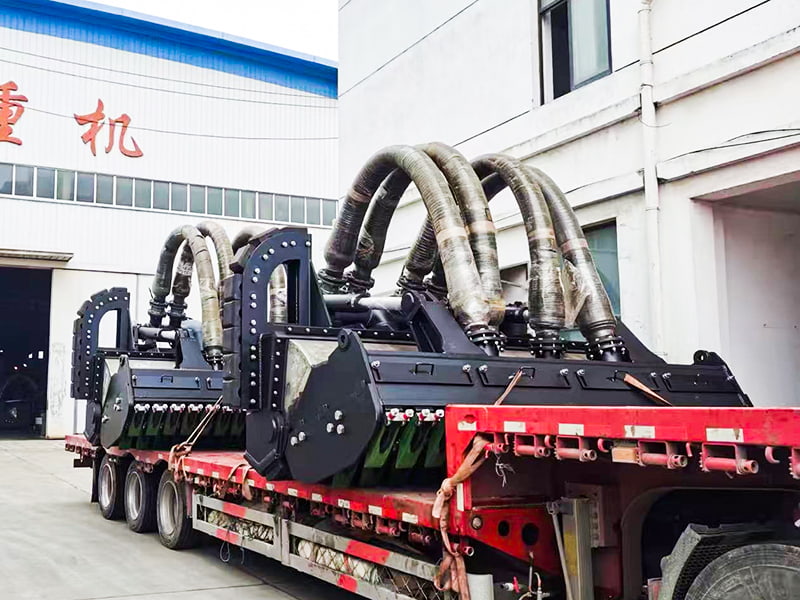 Dragheads for trailing suction hopper dredgersA draghead with replaceable teeth and water-jet nozzles, positioned where wear concentrates on the lip, screen and suction mouth.View Product →
Everything after the drag head — bow connection, gantry, hopper doors, self-emptying door, gate valve, overflow duct and swell compensator — exists to move and release the load predictably. A single sticking door can idle a hopper cycle, which is why contractors treat door hardware as critical rather than auxiliary.
The wear package is where demand repeats every year
Budget the wear package against dredging hours rather than the calendar, because teeth and liners fail on tonnage moved, not on time elapsed.
Sand with a high silica content can take a set of cutting teeth far faster than the same yard expects from a clay job, and a change of borrow area mid-project can reset the whole consumption forecast. Projects that track wear per cubic metre rather than per month usually order more accurately.
Cutting items
Cutter teeth, tooth holders and wear plates on the cutter head — the first parts to be reordered on a rock or compacted sand job.
Flow parts
Suction bends with arm pieces, swivel bends, pipe sections and pump liners, all subject to abrasive slurry at velocity.
Sealing and flexing
Turning glands, swell compensators, cardanic joints and hydraulic seals that keep the dredging line watertight under movement.
Deck and hopper hardware
Hopper door rams, gate valves, winch wires and sheaves, plus gantry components used during maintenance.
 Dredge cutting teeth and adaptersTooth systems for cutter heads, cutting wheels and drag heads, with chisel and pick-point types plus packaging options for consolidated shipments.View Product →
One practical habit from the field: consolidate the shipment. A large item such as a drag head, a dredge arm or a cutter drive assembly travelling with teeth, bushes and pipe sections in the same crate saves freight and clears customs once. A recent drag head and parts delivery followed exactly that pattern.
What to write into the specification before requesting quotations
Write the specification around fit, material and documentation, because those three decide whether a non-standard part works on the first lift.
| Specification item | What to state | Why it matters |
|---|---|---|
| Interface dimensions | Parent drawing numbers, centre distances, bolt patterns, pin and bore diameters | A non-standard part only fits the dredger it was measured against |
| Material and hardness | Base material grade plus hardness for wear areas and tooth seats | Wear life in abrasive sand is decided here, not in the workshop |
| Welding and inspection | Weld procedure, weld class and inspection extent for load-carrying welds | Ladder, spud and drag components carry dynamic and fatigue loads |
| Machined tolerances | Fits for shafts, bearings, seal seats and gland clearances | Misalignment shows up later as leaks, vibration and premature wear |
| Class and quality | CCS, BV, ABS or RINA approval where the item sits in a classed system; ISO 9001-2015 quality records | Surveyors ask for evidence at installation, not afterwards |
| Documentation set | Material certificates, dimensional reports, inspection reports, packing list, recommended spares | Without reports, the spare cannot be verified on arrival at site |
Lead time, spares strategy and lifecycle cost
Plan purchases against the dredging season and the yard window, because a part that arrives after the weather window costs a mobilisation as well as a part.
- Set a critical spares list per vessel: one gland, one swivel bend, one set of teeth and one drag head lip cover most unscheduled stops.
- Buy long-lead machined items with planned maintenance: shafts, rudder stocks and cutter drive assemblies are best ordered alongside a scheduled docking.
- Ask for dimensional reports: a spare that can be checked against the drawing on arrival avoids a second lift.
- Group export shipments: consolidated crates travel better and clear customs once, which matters for buyers in Europe, the Americas and Asia.
For port work the goal is not the lowest unit price. It is the lowest cost per cubic metre dredged, which rewards parts that hold their shape through a full campaign. If you are comparing suppliers for a specific channel or berth project, send the drawings and operating conditions so the quotation is built on the actual duty rather than a catalogue size.
Frequently asked questions
How early should dredging equipment be ordered before a port contract starts?
Earlier than the mobilisation date, not the contract date. Wear items can usually be scheduled inside a normal production cycle, while fabricated assemblies such as a dredge arm, bow coupling or gantry need drawing approval, welding, machining and inspection in sequence, so they belong in the planning phase before the vessel is committed.
Is it cheaper to repair a worn dredge arm or replace it?
Repair wins when the wear is local, the parent material is still sound and the interface dimensions are unchanged. Replacement wins once the wall thickness, straightness or weld quality no longer supports another campaign, because a repaired part that fails mid-project costs far more than the new part.
Which spare parts are worth holding on site?
Anything that stops the dredge when it fails: cutting teeth, turning glands, swell compensators, hopper door seals and hydraulic hoses. Rotating and machined items such as shafts or cutter drive assemblies are usually better covered by a service agreement than by stock.
Can non-standard parts be manufactured from drawings or samples?
Yes, and that is the normal route for dredging components, since most were never catalogue items. The reliable approach is to combine the original drawing with site measurements, then confirm material grade, hardness and inspection requirements in writing before production begins.