
 English
 中文简体
中文简体
What Is a Swell Compensator on a Dredger? Functions, Types, and Benefits
Content
Picture a trailing suction hopper dredger (TSHD) working three miles offshore in a moderate sea state. The vessel heaves up and down with each wave, while the draghead—a massive suction mouth—must maintain steady contact with the seabed to keep production rates high. Without a swell compensator, the draghead would either bounce off the bottom, losing suction, or dig too deep, damaging the pipe and the seafloor. The swell compensator is the hydraulic system that absorbs vessel motion and holds the draghead at a near-constant pressure against the bed, regardless of wave action. It is not an optional accessory; it is a core productivity enabler on any modern TSHD.
How a Swell Compensator Works
The compensator sits between the draghead and the gantry or winch system. Its main components are one or more hydraulic cylinders, a gas‑charged accumulator, and a set of control valves. As the vessel rises on a wave, the cylinder extends, drawing oil from the accumulator, which keeps the draghead pressed down. When the vessel falls, the cylinder retracts, pushing oil back into the accumulator and preventing the draghead from being forced into the seabed. The accumulator acts as a spring with adjustable pre‑charge pressure, allowing the operator to set the desired contact force.
| Parameter | Without Compensator | With Compensator |
|---|---|---|
| Draghead contact stability | Poor – fluctuates with wave height | High – controlled within ±5% of set force |
| Suction efficiency (%) | 60–75 (variable) | 90–98 (consistent) |
| Risk of bottom damage | High in swell | Low |
| Downtime due to weather | Significant above 1.5 m wave height | Operational up to 3 m waves |
| Maintenance frequency (draghead & pipe) | Frequent wear | Reduced by 40% |
The control system can be passive (accumulator only), active (with hydraulic pump and servo valves), or semi‑active. Modern TSHDs increasingly use active or semi‑active compensators that adjust stiffness in real time based on vessel motion sensors. These systems further reduce peak loads and improve dredging consistency.
Common Types of Swell Compensators
| Type | Operating Principle | Best for | Energy Source |
|---|---|---|---|
| Passive | Gas‑charged accumulator provides spring force; no external power | Small TSHDs, sheltered waters | None (pre‑charged) |
| Active | Hydraulic pump with servo valves actively moves cylinder to cancel heave | Large ocean‑going TSHDs, severe sea states | Electric or diesel‑hydraulic |
| Semi‑active | Accumulator with variable orifice that adjusts damping in real time | Medium TSHDs, moderate wave conditions | Low‑power control valve |
Passive compensators are simple and reliable but cannot adapt to changing wave periods. Active compensators deliver superior performance but consume more energy and require complex maintenance. Semi‑active compensators offer a balanced compromise and are gaining popularity in the industry.
Why Every TSHD Needs a Swell Compensator
The primary benefit is consistent production. A compensator keeps the draghead in optimal contact with the seabed, maximising solids concentration in the slurry. Field data shows that installing a properly tuned compensator can increase hourly production by 20–35% in moderate swell conditions.
Secondary benefits include reduced wear on the draghead, suction pipe, and swivel joints; less fuel consumption because the winch is not constantly fighting vessel motion; and a wider weather window—the vessel can operate safely in wave heights that would otherwise force it to stop.
Example data based on field studies (1.5 m significant wave height, 8‑second period)
Application on Trailing Suction Hopper Dredgers
Although swell compensators can be found on other dredge types, they are most critical on TSHDs because of the vessel’s size and the long, flexible drag arm. The compensator is typically installed at the gantry or at the draghead pivot point. Proper integration with the ship’s motion monitoring system allows the compensator to anticipate heave and react proactively.
Our company, Taizhou Sanyang Heavy Machinery, manufactures a range of swell compensators specifically engineered for TSHDs up to 200,000 DWT. Each unit is tested under simulated wave profiles to ensure reliable operation in the harshest seas.
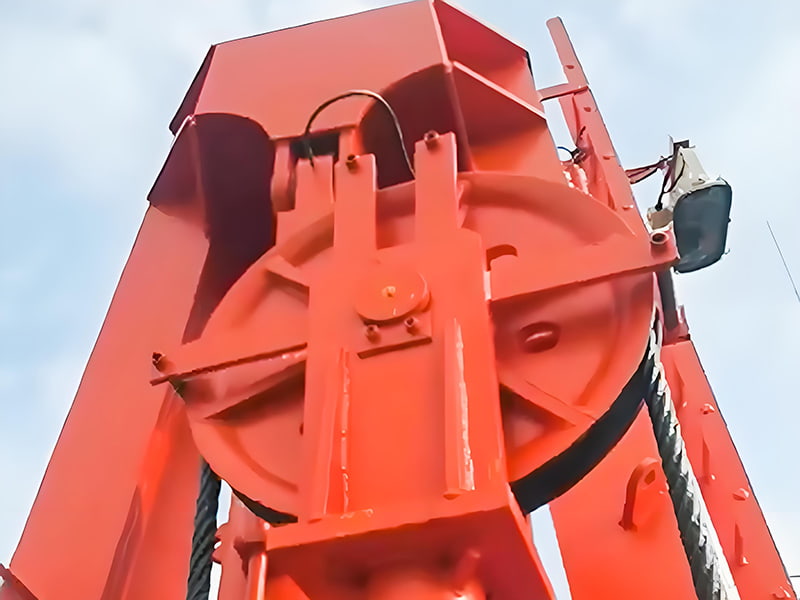 Swell Compensator for Large Trailing Suction Hopper DredgersManufactured for TSHDs up to 200,000 DWT and verified under simulated wave profiles, this compensator provides heave compensation of 2–5 meters, maintains drag head tension within ±5%, and absorbs up to 80% of shock loads, ensuring stable and efficient dredging operations in harsh marine conditions.View Product →
For more on the broader dredging equipment ecosystem, see our overview of what dredging equipment includes.
Frequently Asked Questions
Can a swell compensator be retrofitted to an existing dredger?
Yes, most TSHDs can be retrofitted. The main requirement is adequate structural support at the gantry or draghead pivot, plus a hydraulic power source. Retrofitting typically takes 2–4 weeks in dry dock and can increase production by 20% or more, offering a fast return on investment.
How often should a swell compensator be serviced?
Manufacturers recommend annual inspection of seals, accumulator gas pressure, and valve operation. Active systems may require more frequent hydraulic oil analysis. With proper maintenance, the compensator lasts the life of the vessel.
What is the difference between a swell compensator and a heave compensation system?
“Swell compensator” is the specific term for the system controlling the draghead on a dredger. “Heave compensation” is a broader term used on cranes, ROVs, and other offshore equipment. Both share hydraulic–accumulator principles but differ in force range and control algorithms.
Does the compensator work in all sea states?
No system can cancel extreme seas. Typical swell compensators maintain effective control up to 2.5–3 m significant wave height. Beyond that, the vessel will likely need to stop dredging for safety reasons, but the compensator still protects the draghead from impact damage during heave.
A swell compensator is not merely a damper; it is a precision instrument that converts a constant battle with waves into a steady, profitable dredging operation. By maintaining consistent draghead contact, it improves production, reduces wear, and extends the weather window. Whether you are upgrading an existing TSHD or designing a new one, investing in a well-designed compensator pays dividends. Contact us to discuss your specific dredging conditions and find the right compensator solution.

Copyright 2025 Taizhou Sanyang Heavy Machinery Co., Ltd. All Rights Reserved Professional Dredging Equipment Manufacturer

Back To Top