
 English
 中文简体
中文简体
Dredge Bow Coupling vs Stern Rotary Joint: Key Differences for Dredging Projects
Content
The Core Distinction in One Sentence
The practical answer is that a dredge bow coupling and a stern rotary joint are not competing components. They solve different problems at different ends of a dredger. If you are comparing them for a retrofit or a newbuild, the deciding factors are installation position, pressure rating, and the way your crew can access the joint for maintenance.
Imagine your crew is ready to pump dredged material to shore at 11:00. The bow coupling must lock quickly. Hours later, the vessel swings on a floating pipeline, and the stern rotary joint must absorb that movement while keeping the line sealed. Both are vital, but they are not interchangeable.
What Is a Dredge Bow Coupling?
A bow coupling is a steel framework with a ball joint and a winch, mounted in the bow of a trailing suction hopper dredger. It connects the onboard discharge pipeline to an external bow discharge line so the dredger can pump material ashore through a shore pipeline, a floating pipeline, or a "rainbow" jet.
Industry references commonly list working pressures of 10 to 30 bar and internal pipe diameters of 350 to 1100 mm. These numbers are indicative, not universal. In procurement, you must verify the actual flange standard, the ball joint pass-through diameter, and the locking mechanism travel.
The most misunderstood aspect is the locking system. On many designs, the coupling uses a series of locking pins that must be engaged manually or with a winch. Silt and sand can wedge into the pin slots, turning a 15-minute connection into a two-hour problem. For that reason, a good bow coupling is judged by its fail-safe lock design and the ease of cleaning the sealing area.
From a procurement perspective, the bow coupling is often underestimated in terms of flange alignment. We have seen cases where the fabricated flange interfered with the hull shell because the supplier used the general arrangement drawing instead of an actual template. Ask the manufacturer for a dimensional scan or a full-scale template before you approve the design.
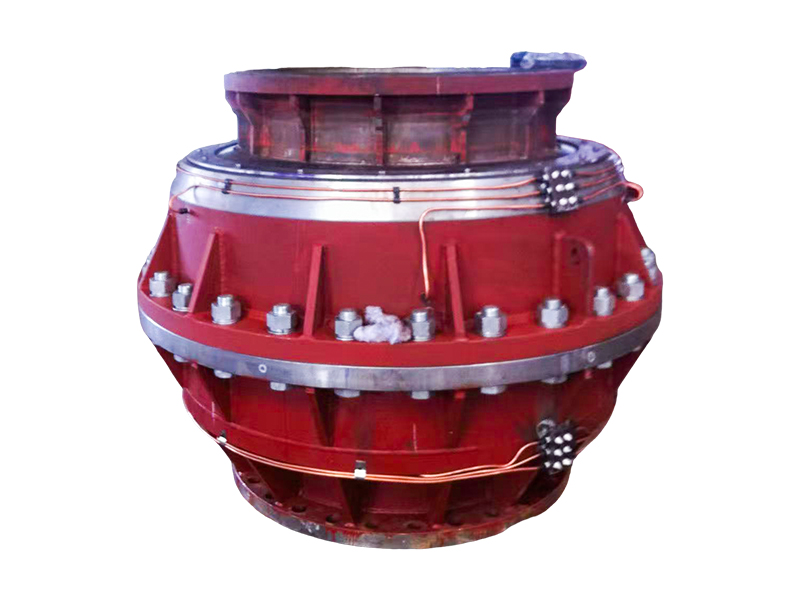 Stern Rotary Joint for Cutter Suction DredgersThis rotating seal connects the fixed pipeline to the excavator arm, ensuring leak-free transfer of high-pressure media. It addresses procurement concerns about concentricity and wear, offering a reliable solution for continuous dredging operations.View Product →
What Is a Stern Rotary Joint?
A stern rotary joint is a rotating seal assembly installed at the stern of a hopper dredger or between the cutter bridge and the suction/discharge pipe of a cutter suction dredger. It allows the pipe to rotate around an axis while maintaining a pressure-tight seal. On cutter suction dredgers, this is often called a swivel bend. On hopper dredgers, it may be referred to as a turning gland or stern pipe swivel.
Unlike a bow coupling, the stern rotary joint has no quick-disconnect function. Its job is continuous rotation. That rotation can come from the dredge arm moving, from hull twisting in waves, or from a floating pipeline pulling on the stern pipe. If the joint cannot rotate, the pipe will stress the hull and eventually crack the supporting structure.
The rotation range is not always 360 degrees. Many designs only allow a few degrees of angular movement to absorb hull deflection. However, a cutter suction dredger that needs to swing its ladder laterally will require a larger range of motion. In your specification, make sure you state the maximum allowable deflection angle, not just the nominal pipe diameter.
When comparing with a bow coupling, remember that the stern rotary joint is sensitive to concentricity. A slight misalignment between the shaft and the stationary housing creates an oval wear pattern on the sealing faces. That wear can lead to vibration, leaks, and eventually an unplanned stop. The procurement focus therefore shifts to bearing clearance, seal face hardness, and the ability to re-adjust the packing or mechanical seal on site.
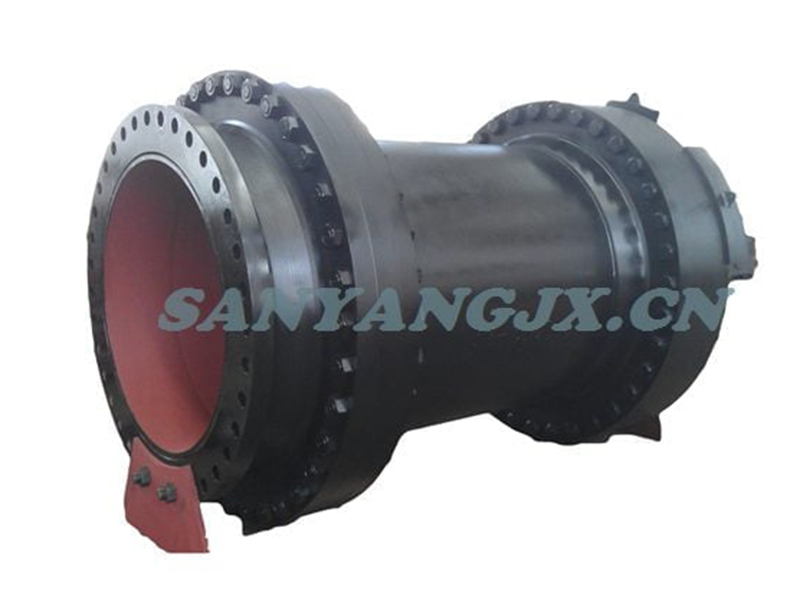 Dredge Turning Gland for Trailing Suction Hopper DredgersDesigned for side suction pipe systems, this gland allows ±15° radial rotation to help the drag head follow the seabed. Its modular construction and mechanical stops enhance durability, making it a practical choice for heavy-duty dredging.View Product →
Design and Installation Differences at a Glance
The table below summarizes how these two components differ in daily use. It is a starting point for a procurement checklist, not a replacement for the manufacturer's drawing.
| Item | Dredge Bow Coupling | Stern Rotary Joint |
|---|---|---|
| Primary location | Bow of trailing suction hopper dredger | Stern pipe connection or cutter bridge |
| Primary function | Connect and disconnect discharge pipe quickly | Allow continuous or limited rotation under pressure |
| Connection style | Locking pins, ball joint, winch | Bearing-supported rotating seal |
| Typical pressure range | 10 to 30 bar | Project-specific; often lower than bow coupling |
| Typical bore range | 350 to 1100 mm | Similar, based on suction/discharge diameter |
| Critical wear areas | Seals, locking lugs, frame corrosion | Seal faces, bearings, shaft alignment |
| Maintenance access | Open bow area, crane assist | Confined space, near machinery or ladder hinge |
| Failure consequence | Cannot pump ashore; delayed shore connection | Leak and vibration; possible pipe stress cracking |
These dimensions are not universal. Always match the actual working medium, slurry density, pressure surge frequency, and operating method when you send an inquiry.
How to Choose: A Practical Procurement Checklist
Start with the installation position. If the interface is at the bow, choose a bow coupling. If the interface is at the stern or on the cutter bridge, choose a rotary joint. This is not a matter of preference; it is a physical requirement.
Beyond that, use the following checklist to avoid the most common purchasing mistakes:
- Confirm the actual pipe bore and flange standard. A nominal diameter is not enough; wall thickness and pipe weight also affect the support structure.
- Review the pressure rating with surge load in mind. The starting of a dredge pump can create water hammer. A component rated only for continuous pressure may fail during the first start.
- Assess maintenance space. The bow coupling requires crane access and repeated disassembly. The stern rotary joint needs room for bearing adjustment and seal replacement inside the hull or on the ladder.
- Check the material specification. High-wear steel and hardfaced seal surfaces cost more but reduce the need for replacement in abrasive slurry.
- Ask for the testing procedure. A hydrostatic test with pressure held for at least 30 minutes is common, but the critical issue is whether the leakage rate is acceptable during a dynamic rotation test.
If your project involves both cutter suction and trailing suction dredgers, it helps to see how these parts fit into a wider dredging equipment system. A component is only reliable when the surrounding pipe supports and brackets are correctly aligned.
Common Failure Modes and Maintenance Priorities
Bow couplings fail in three predictable ways: the locking pins seize from accumulated silt, the seal ring loses its compression, or the supporting steel frame corrodes near the flange. Because the coupling is opened and closed frequently, the seal surfaces are prone to scoring from sand particles. Inspect the O-rings and backing rings before every connection.
Stern rotary joints face a different set of risks. When the hull twists in waves, the rotating member may move out of alignment. Over time, this creates an oval-shaped wear pattern on the sealing faces. A bearing that loses its preload produces vibration, which quickly damages the adjacent pipe support.
For both components, a practical maintenance schedule looks like this:
- Flush contact surfaces after each shift to remove silt and mud residue.
- Record pressure test results and compare them with the previous values. A slow increase in leakage is an early warning.
- Verify bolt torque on the flange connection after the first few operating cycles. Thermal cycling can loosen fasteners.
- For the rotary joint, measure radial runout with a dial indicator. If it exceeds the value in the equipment drawing, stop using the unit and re-align it.
- Keep spare parts limited to the high-wear items: seal rings, locking pins, hinge pins, bearing shells, and guide rings. Avoid buying a full list of parts that may sit in storage for years.
The cost of unplanned downtime is often much higher than the cost of a well-planned replacement. A dredger waiting for a bow coupling seal can lose a full tide cycle. A leaking stern rotary joint can force the vessel to stop pumping entirely.
Frequently Asked Questions
Can a stern rotary joint replace a dredge bow coupling?
No. The rotary joint does not have the locking mechanism or the winch assist needed for quick pipe connection. The bow coupling is not designed for continuous rotation. Swapping them would make the discharge system impossible to operate.
Which component wears faster?
It depends on the duty. A dredger that pumps highly abrasive slurry with frequent start-stop cycles will wear out the bow coupling seals faster. A dredger that rotates the pipe continuously but runs with misalignment will wear out the rotary joint bearings faster. Ask the supplier for a wear curve based on the slurry type and operating hours.
What should I include in an RFQ?
At minimum, provide the design pressure, test pressure, maximum allowable deflection angle, flange size and material, seal type, weight, maintenance access requirements, and whether the supplier can provide a full inspection report. These details help you eliminate mismatched products early.
How long should these parts last in a typical dredging season?
There is no fixed answer. In clean sand, you may get several seasons with one seal set. In heavy clay or mud containing fine grit, the same seal may need replacement within one season. The reliable approach is to monitor leakage and vibration rather than relying on a calendar.
Final Recommendation
Before you send a purchase order, map the complete slurry pipeline. Mark every point that needs a locking interface and every free end that must rotate. Then specify each component according to the pressure, bore, and maintenance access at that exact location.
In our experience, most field failures are not caused by a bad casting or poor steel. They are caused by a mismatch between the component and the operating method. A well-selected bow coupling pays for itself every time the crew makes the shore connection in less than an hour. A well-designed stern rotary joint keeps the pipe moving without stress, season after season. If you can align those two decisions with the actual ship layout, your dredging operation will be far more reliable.

Copyright 2025 Taizhou Sanyang Heavy Machinery Co., Ltd. All Rights Reserved Professional Dredging Equipment Manufacturer

Back To Top