
 English
 中文简体
中文简体
Dredger Spare Parts Guide: Cutter Head, Drag Head, Ball Joint
Content
- 1 Why Demand For Dredger Spare Parts Keeps Rising
- 2 Core Categories Every Dredge Spare Parts Manufacturer Should Cover
- 3 Cutter Suction Dredger Components: Where Cutting Efficiency Is Won Or Lost
- 4 Trailing Suction Hopper Dredger Components
- 5 Featured Dredging Component Range
- 6 Ball Joints, Gate Valves And Pipeline Flow Control
- 7 Propulsion And Rudder System Components
- 8 Where Replacement Demand Concentrates Across A Dredging Fleet
- 9 Spud Systems: Holding Position During Cutting Operations
- 10 Manufacturing Capability Behind Reliable Dredge Spare Parts
- 11 Checklist For Evaluating A Dredger Spare Parts Manufacturer
- 12 Choosing A Long-Term Dredge Spare Parts Partner
Quick Answer
A reliable dredger equipment supplier is defined by three things: full coverage of wear parts for both cutter suction dredgers (CSD) and trailing suction hopper dredgers (TSHD), engineering capability for propulsion and steering systems, and traceable metallurgy for every cutter tooth, ball joint, and drag head shipped. This article breaks down the core dredge spare parts categories, the materials that determine service life, and how buyers can evaluate a dredger spare parts manufacturer before placing an order.
Why Demand For Dredger Spare Parts Keeps Rising
Port deepening, offshore wind cable trenching, and inland waterway maintenance all consume wear parts at a predictable rate. A cutter suction dredger working in compact sand or gravel will typically replace its cutter teeth every 150 to 400 working hours, while a trailing suction hopper dredger operating on abrasive seabeds can wear through drag teeth within a similar cycle. As dredging fleets are kept in service longer rather than replaced, the aftermarket for dredge spare parts has become steadier and more predictable than new-build vessel orders.
Illustrative replacement-part order frequency across a maintenance fleet as vessels age past their tenth service year, driven mainly by cutter head, drag head, and ball joint turnover.
Core Categories Every Dredge Spare Parts Manufacturer Should Cover
Dredger spare parts fall into four functional groups. A supplier that only stocks one or two of these groups forces buyers to juggle multiple vendors, which slows down repair windows during dry-dock or in-water maintenance.
Excavation Parts
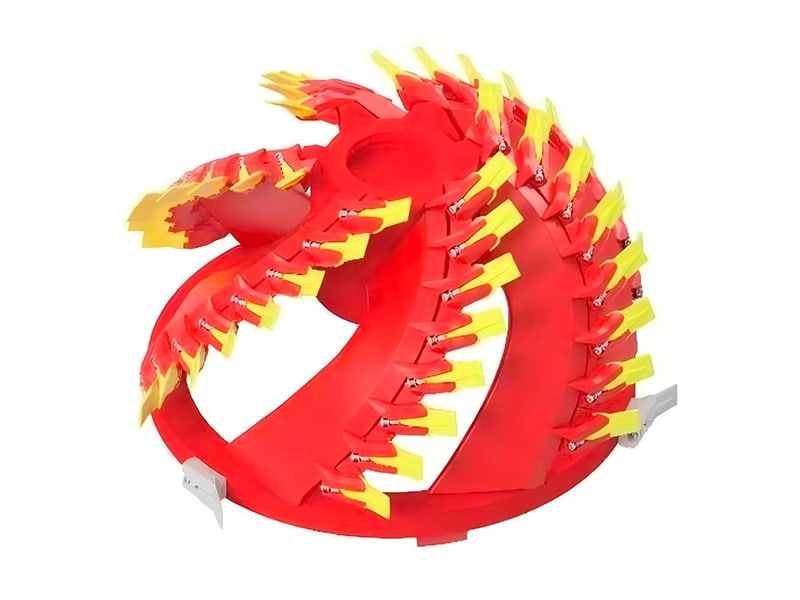
Dredge cutter head, cutter teeth, drag head, drag teeth and adapters that make first contact with the seabed.
Structural & Handling Parts
Gantry, spud, spud carrier, hopper door, bottom door and drag arm assemblies that carry mechanical load.
Pipeline & Flow Control
Dredge ball joint, gate valve, overflow pipe and bow coupling that keep the slurry pipeline sealed and flexible.
Propulsion & Steering
Propeller shaft, cutter shaft, stern shaft and rudder system components that keep the vessel maneuverable.
Cutter Suction Dredger Components: Where Cutting Efficiency Is Won Or Lost
On a cutter suction dredger, the dredge cutter head is the single component that most affects production output. Blade profile, spacing, and tooth orientation determine how much material the machine can cut per rotation, and how quickly the cutter suction assembly wears down.
Cutter Head
Double-curved blades guide cut material toward the suction mouth. Blade arm counts typically range from 5 to 6 depending on the suction pipe diameter, which itself can run from roughly 250 mm on small units up to 950 mm on large-scale cutter heads.
Cutter Teeth
Wide front-chisel teeth suit peat, soft clay and loose sand. Narrower chisel teeth handle firmer ground, while pick-point teeth are reserved for hard ground and rock. Teeth are mounted on welded adapters and secured with a removable locking pin for fast field replacement.
Cutter Shaft & Cutter Suction Drive
The cutter shaft transfers torque from the cutter suction drive to the cutter head hub, which uses a trapezoid thread for secure mounting. Rotation speed on most models is adjustable, commonly within a 0 to 30 or 0 to 35 r/min range.
Trailing Suction Hopper Dredger Components
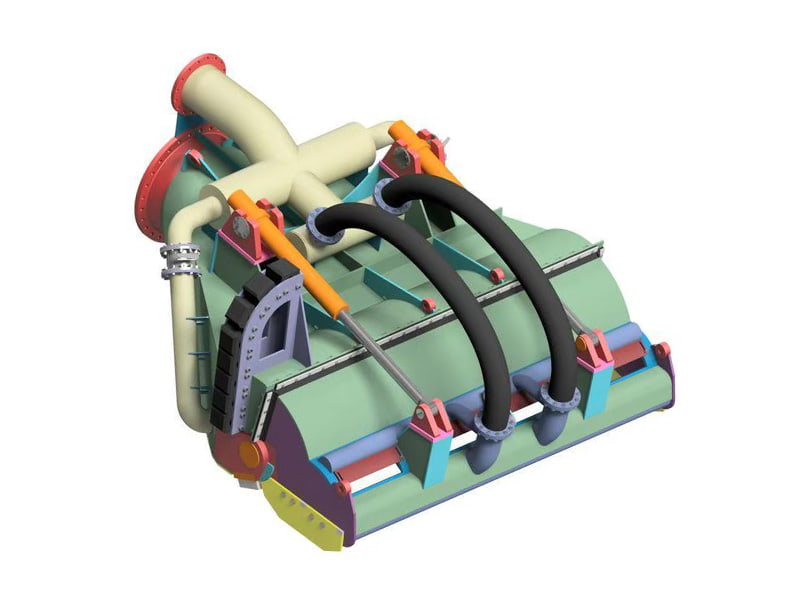
A TSHD relies on a different chain of parts. The drag arm lowers the drag head to the seabed, and the mixture of water and material travels back through the drag pipe into the hopper, discharging surplus water through the overflow pipe.
| Component | Function |
| TSHD Drag Arm | Connects the drag head to the vessel and controls depth via hydraulic winches and gantries. |
| Drag Head & Drag Teeth | Cuts and loosens the seabed with replaceable teeth; water jet nozzles assist in sand and mud. |
| Gantry | Supports and guides the drag arm and suction pipe during raising and lowering operations. |
| Hopper Door / Bottom Door | Opens to release dredged material from the hopper at the disposal or reclamation site. |
| Overflow Pipe | Discharges excess water once the hopper reaches its target load density. |
| Bow Coupling | Joins the fixed pipeline to the rotating drag arm assembly at the bow. |
Featured Dredging Component Range
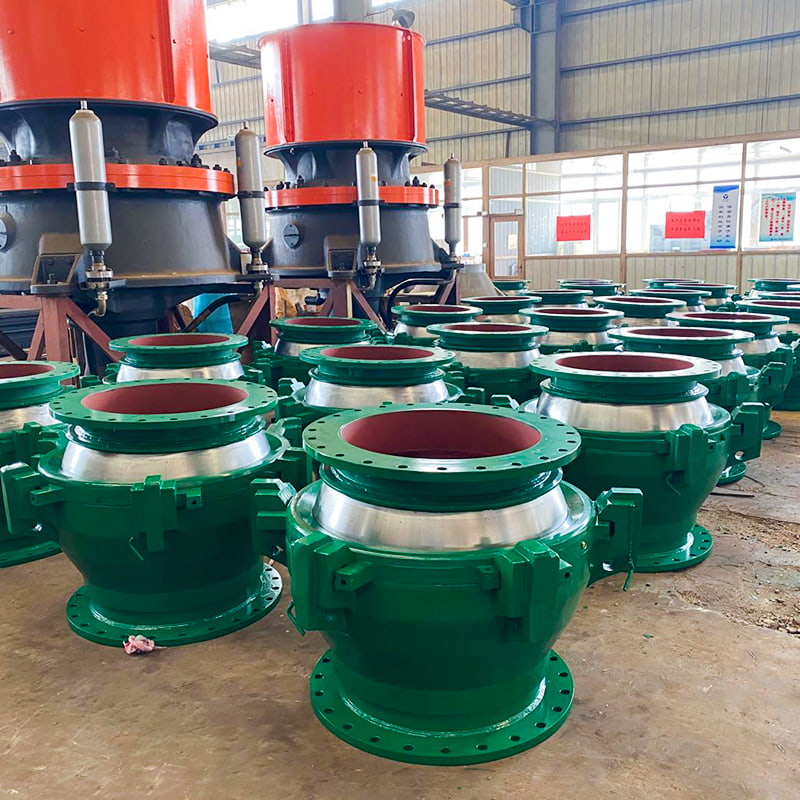
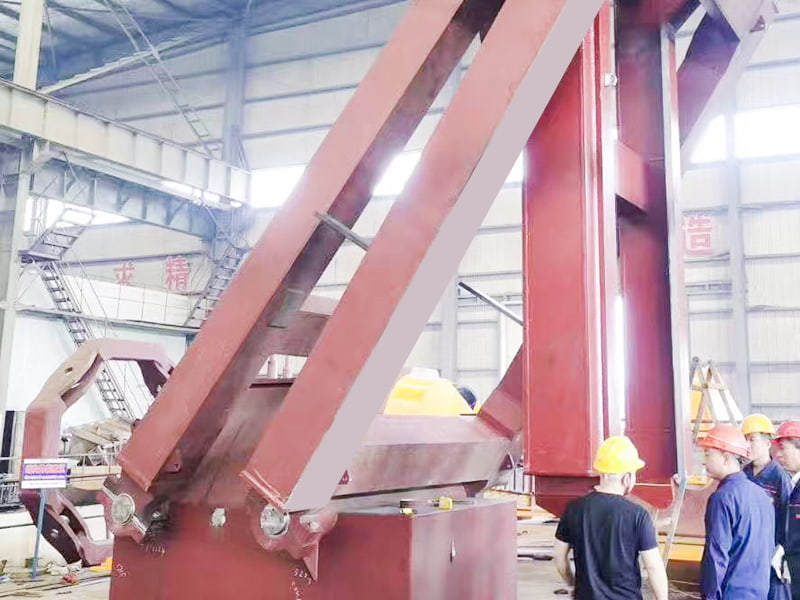
A representative selection of the dredge spare parts produced for cutter suction dredgers, trailing suction hopper dredgers, and general dredging pipeline systems.
Ball Joints, Gate Valves And Pipeline Flow Control
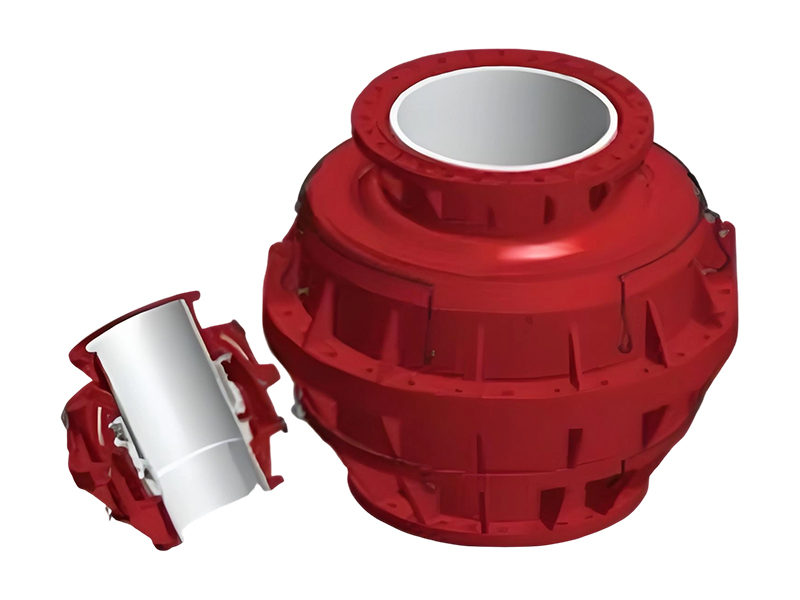
Dredge ball joints connect fixed and floating sections of the discharge pipeline, allowing rotation in all directions even in rough water without restricting flow. They are typically available in gland-type and bolted-type connections, with tilting angles commonly set at 15 or 18 degrees to match pipeline geometry.
Common dredge ball joint pressure ratings. Higher-pressure ball joints are generally paired with bolted connections and reinforced sealing for long-distance reclamation pipelines. A dredger gate valve is typically installed alongside the ball joint circuit to isolate sections of pipe during teeth or joint replacement.
Propulsion And Rudder System Components
Beyond the excavation and pipeline systems, a complete propulsion system keeps the vessel positioned and maneuverable during dredging operations. This covers the marine propeller shaft, the propeller itself, and the full rudder system.
Propeller & Propeller Shaft
Transfers engine torque into thrust; shafting is machined to close tolerances and paired with the stern shaft for reliable long-term operation.
Stern Shaft
Passes through the stern tube, supporting the propeller shaft while sealing against water ingress into the engine room.
Rudder System & Rudder Shaft
Provides directional control; the rudder shaft connects the steering gear to the steering rudder blade for precise course changes during dredging passes.
Steering Rudder
Sized and profiled according to vessel displacement and dredging duty cycle to balance maneuverability with fuel efficiency.
Where Replacement Demand Concentrates Across A Dredging Fleet
- Cutter head & drag head parts - 42%
- Ball joints & pipeline fittings - 26%
- Propulsion & rudder components - 18%
- Spud & structural parts - 14%
Excavation-side wear parts consistently account for the largest share of replacement orders, which is why a dredger equipment supplier with in-house cutter head and drag head manufacturing can respond faster than a trading company sourcing from multiple factories.
Spud Systems: Holding Position During Cutting Operations
The spud, spud carrier and spud holder work together to anchor a cutter suction dredger in place while the cutter head swings through its cutting arc. Spud carriers must handle repeated cyclic loading, so wall thickness and weld quality at load-bearing points directly affect fatigue life.
Spud
The vertical steel pile that pins the vessel to the riverbed or seabed during operation.
Spud Carrier
Guides and raises or lowers the spud through hydraulic cylinders mounted at the stern.
Spud Holder
Sleeves the spud against the hull, absorbing lateral loads generated during cutting passes.
Manufacturing Capability Behind Reliable Dredge Spare Parts
Component reliability starts on the shop floor. Two pieces of equipment in particular determine whether large structural parts hold their tolerances after fabrication.
Cold Bending Machine
Forms thick steel plate for drag arms, gantries and pipe sections without heat-affected zones, preserving the base material's mechanical properties across the bend.
Aft Installation Platform
Provides a controlled setting for fitting propeller shafts, stern shafts and rudder systems, ensuring shaft alignment meets classification society tolerances before delivery.
Checklist For Evaluating A Dredger Spare Parts Manufacturer
| Evaluation Point | What To Confirm |
| Product Range | Covers both CSD and TSHD parts, plus propulsion and rudder systems, not just one product line. |
| Customization | Able to match cutter head suction pipe diameter and blade arm count to your existing vessel. |
| Ball Joint Options | Offers both gland and bolted connections with documented pressure ratings. |
| Packaging & Shipping | Provides wooden case or iron frame packaging suited to sea, air, or rail transport. |
| After-Sale Support | Maintains responsiveness for spare part queries after the vessel has left the shipyard. |
Choosing A Long-Term Dredge Spare Parts Partner
Downtime on a dredging project is measured in thousands of dollars per hour, which makes part availability as important as part price. Buyers are best served by a dredger equipment supplier that manufactures cutter heads, drag heads, ball joints, and propulsion components under one roof, since it shortens the chain between a wear report and a replacement part arriving on site.

Copyright 2025 Taizhou Sanyang Heavy Machinery Co., Ltd. All Rights Reserved Professional Dredging Equipment Manufacturer

Back To Top