
 English
 中文简体
中文简体
How to choose the right dredging ball joint for high-abrasion environments?
Content
- 1 Why Abrasion Resistance Decides the Lifespan of a Dredge Ball Joint
- 2 Material and Lining Choices That Extend Service Life
- 3 Gland Type or Bolted Connection: Matching the Joint to Abrasive Duty
- 4 Pressure Rating, Angle and Bore Size: Getting the Specification Right
- 5 Related Dredge Wear Components From Our Product Range
- 6 Sealing, Lubrication and Maintenance Practices That Add Years of Service
- 7 A Practical Checklist Before Placing an Order
- 8 Common Questions on Selecting a High-Abrasion Ball Joint
The short answer: for high-abrasion slurry lines, choose a dredge ball joint with a hardened or ceramic-lined bore, a gland-type connection rated at least one pressure class above your pump's peak discharge, and a wall thickness margin that accounts for particle-laden flow. Getting these three variables right is what separates a ball joint that lasts a single dredging season from one that survives several years of sand and gravel transport.
Why Abrasion Resistance Decides the Lifespan of a Dredge Ball Joint
Ball joints sit at the flexible connection points of a dredger's discharge pipeline, absorbing the constant angular movement caused by wave action, pontoon flex and pipeline articulation. Unlike a straight pipe section, the internal geometry of a ball joint creates turbulence at the ball-and-socket interface, which concentrates particle impact in a narrow band rather than spreading wear evenly. On a cutter suction dredger moving coarse sand at 4 to 6 meters per second, this localized wear can reduce wall thickness by several millimeters within a single operating season if the wrong material is specified.
Sand content, particle angularity and flow velocity are the three variables that determine how fast a ball joint wears out. Crushed rock and coral fragments cause far more damage than rounded river sand at the same concentration, so the joint that performs well on a silt-dredging trailing suction hopper dredger may fail within weeks on a rock-cutting project.
Material and Lining Choices That Extend Service Life
The single biggest lever for abrasion resistance is what touches the slurry. Standard carbon steel bodies wear quickly under continuous particle contact, while hardened liners or replaceable wear rings shift the wear point to a part that can be swapped out instead of the whole joint.
| Body / Liner Material | Typical Hardness | Best Suited For | Relative Wear Life |
| Carbon steel, unlined | 150-180 HB | Silt, mud, low-sand dredging | Baseline |
| High-manganese steel | 200-230 HB (work-hardens to 500+ HB) | Sand, gravel, mixed sediment | 3 to 5 times |
| Chrome-alloy hardfaced liner | 55-62 HRC | Crushed rock, coral, coarse gravel | 5 to 8 times |
| Ceramic-tile insert | 1200-1500 HV | Extreme abrasion, mineral tailings | 8 to 12 times |
High-manganese steel remains the most common choice for dredge ball joints because it work-hardens under impact, meaning the surface actually gets tougher the longer it is exposed to abrasive flow, without the brittleness that can affect fully hardened alloys under sudden shock loading.
Gland Type or Bolted Connection: Matching the Joint to Abrasive Duty
A dredge ball joint is available in two connection styles, and the choice affects both wear behavior and maintenance speed. Gland-type joints use a rotating collar that can be loosened by hand or with a spanner, allowing the pipe section to be disconnected quickly for inspection or liner replacement. Bolted joints use a fixed flange ring, which offers a more rigid seal under high pressure but takes longer to open for wear checks.
- Gland type suits projects with frequent pipeline reconfiguration, since sections can be rotated or swapped without breaking the full flange bolt pattern.
- Bolted type suits continuous, long-duration dredging where the pipeline stays in one configuration for weeks and vibration resistance matters more than quick disassembly.
- Both styles are commonly available with 15 degree or 18 degree deflection angles, and either can be built for flange or welded end mounting depending on how the rest of the pipeline is assembled.
For high-abrasion work specifically, gland-type joints have a practical advantage: they let crews rotate the ball joint periodically so wear is distributed around the bore rather than concentrated on one side, which is not possible with a fixed bolted assembly.
Pressure Rating, Angle and Bore Size: Getting the Specification Right
Abrasion resistance is only half the equation. A ball joint that is undersized for the pipeline's pressure class will fail at the seal long before the liner wears through, regardless of material choice.
| Pressure Class | Typical Application | Recommended Angle |
| 1.0 - 1.5 MPa | Short discharge lines, small trailing suction hopper dredger units | 15 degrees |
| 2.0 - 2.5 MPa | Medium cutter suction dredger pipelines, floating pipe sections | 15 or 18 degrees |
| 3.0 MPa and above | Long-distance discharge, booster pump stations | 18 degrees |
As a working rule, specify the ball joint one pressure class above the pump's rated peak discharge pressure rather than its average operating pressure. Surges caused by valve closure, drag arm repositioning, or a gate valve shutting suddenly can spike well above steady-state readings, and an undersized joint is the first component to leak under that spike.
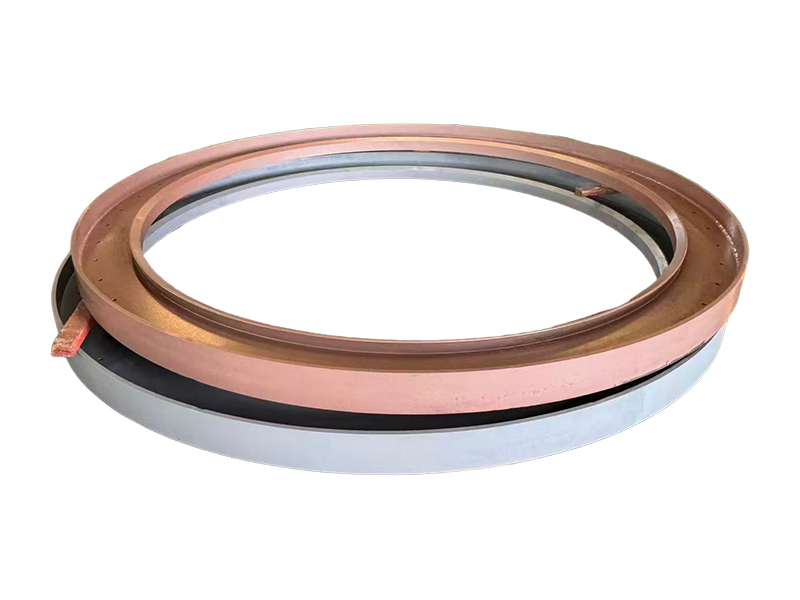
Related Dredge Wear Components From Our Product Range
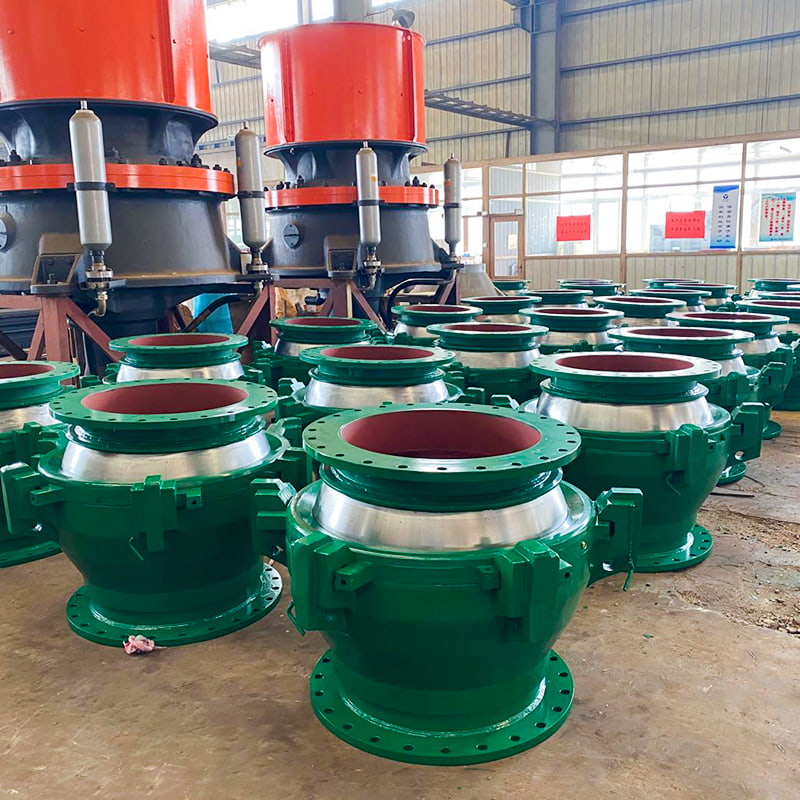
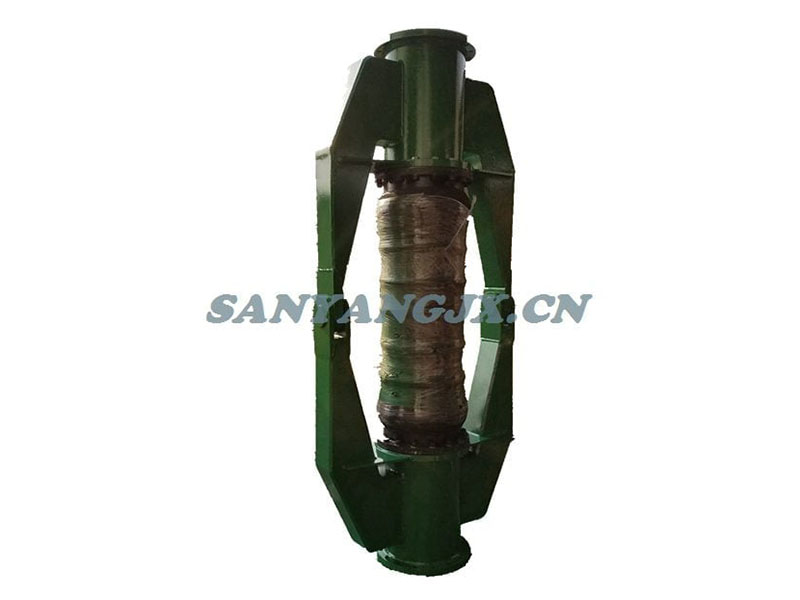
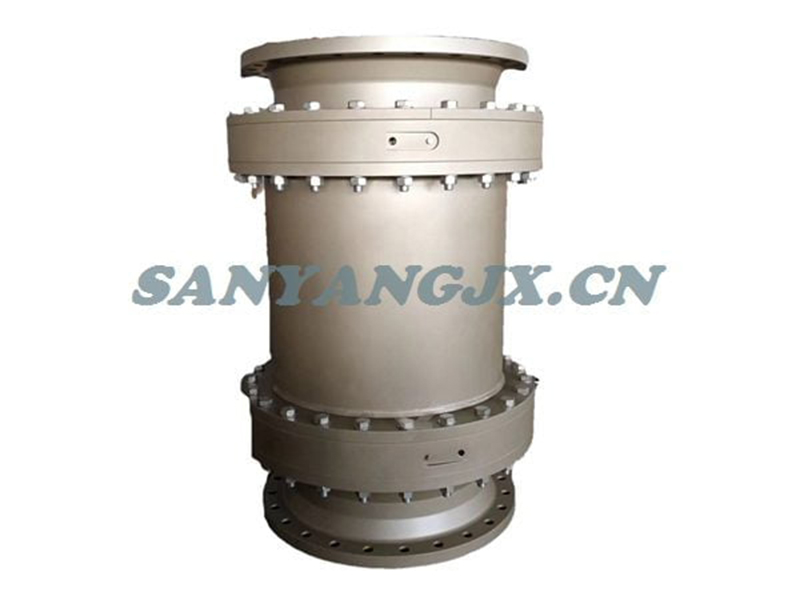
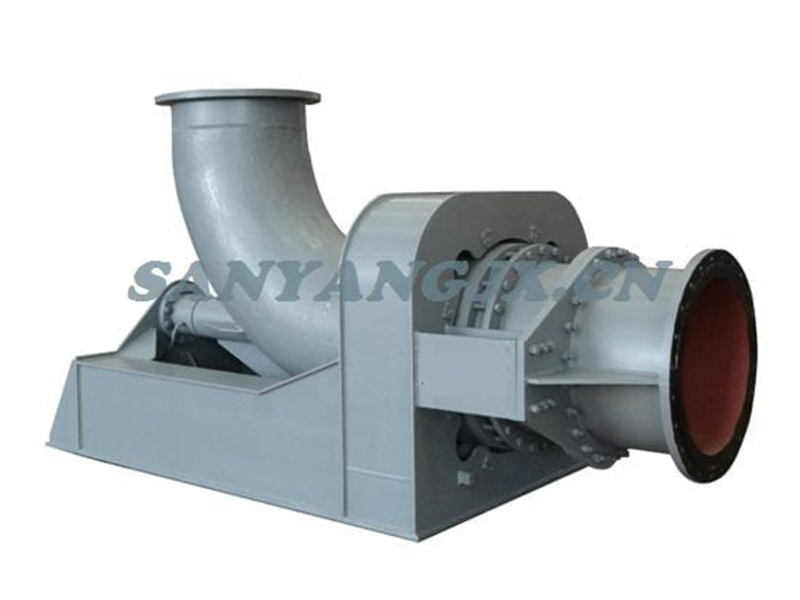
Alongside dredge ball joints, our production line covers the connected wear parts that share the same slurry path, so pipeline sections can be matched for consistent abrasion life from the cutter head through to the discharge outlet.
Sealing, Lubrication and Maintenance Practices That Add Years of Service
Even the best liner material will not perform if the seal at the ball-and-socket interface is neglected. Most dredge ball joints use a rubber or polyurethane seal ring compressed between the ball and the gland, and this seal wears faster in abrasive service because fine particles migrate into the seal groove during every rotation cycle.
- Inspect the seal groove every 200 to 300 operating hours in sand or gravel service, and every 500 hours in silt or mud service.
- Flush the joint with clean water before extended shutdowns to prevent settled particles from packing around the seal.
- Rotate gland-type joints periodically so the ball wears evenly rather than developing a groove on one side.
- Keep a spare wear ring or liner on board; swapping a worn liner takes a fraction of the time needed to replace a full joint assembly.
- Check bolt torque on bolted joints after the first 100 hours of new service, since vibration can loosen fittings before the gasket has fully seated.
A Practical Checklist Before Placing an Order
Working with a dredger equipment supplier that understands slurry abrasion, rather than a generic pipe fitting manufacturer, tends to shorten this process considerably.
| Specification Point | What to Confirm |
| Sediment type | Silt, sand, gravel, or rock fragments in the dredged material |
| Flow velocity | Measured or estimated slurry speed through the pipeline in meters per second |
| Pressure class | Pump peak discharge pressure plus a safety margin |
| Connection style | Gland type for frequent access, bolted type for long-term stability |
| Angle and bore size | Matched to existing pipeline diameter and required deflection |
A dredge spare parts manufacturer that can supply matched wear rings, liners and gate valves alongside the ball joint itself also reduces the risk of mismatched tolerances between components sourced from different suppliers, which is one of the more common causes of premature seal failure on mixed-brand pipelines.
Common Questions on Selecting a High-Abrasion Ball Joint
How often should a ball joint be replaced in sand dredging service
With a manganese steel liner and regular rotation, most joints in continuous sand service last one to two full dredging seasons before the liner needs replacement, though the outer body and seal housing often last considerably longer if inspected on schedule.
Can the same ball joint be used on both a cutter suction dredger and a trailing suction hopper dredger
The core design is shared, but the pressure rating and angle are usually specified differently, since a cutter suction dredger pipeline typically runs longer distances at higher steady pressure while a trailing suction hopper dredger line handles more dynamic movement near the drag arm.
Is a ceramic-lined joint worth the extra cost
For crushed rock, coral or mineral tailings service, yes, since the extended wear life often offsets the higher unit price within a single project cycle. For silt or fine sand, a high-manganese steel liner usually delivers a better cost-to-life ratio.

Copyright 2025 Taizhou Sanyang Heavy Machinery Co., Ltd. All Rights Reserved Professional Dredging Equipment Manufacturer

Back To Top