
 English
 中文简体
中文简体
What Is a Dredge Cutter Head?
Content
- 1 How a Dredge Cutter Head Works
- 2 Main Structural Components
- 3 Choosing Cutter Teeth by Soil Type
- 4 Typical Cutter Head Specifications
- 5 Cutter Head vs. Drag Head
- 6 Supporting Equipment in the Cutter Suction Assembly
- 7 Related Dredger Spare Parts
- 8 Maintenance and Wear Management
- 9 Selecting the Right Cutter Head
How a Dredge Cutter Head Works
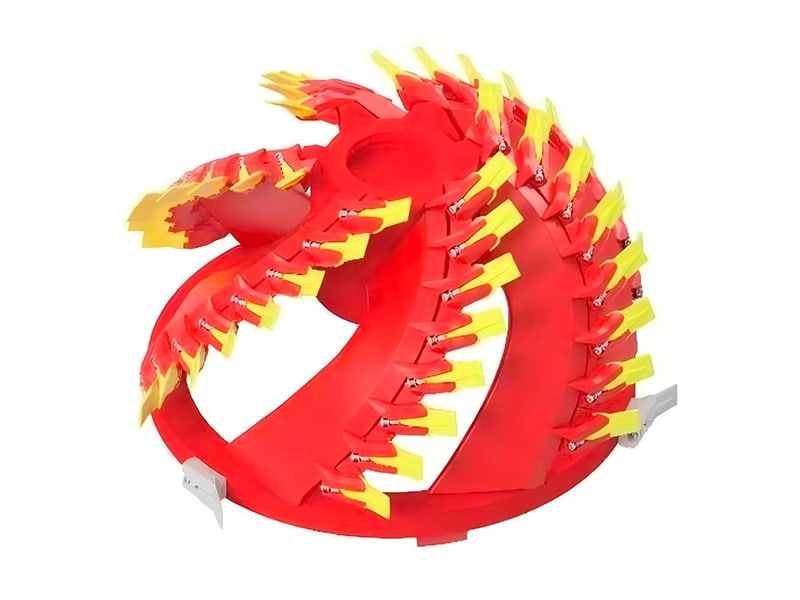
The cutter head is fixed to the end of the cutter shaft, which is in turn driven by the cutter suction drive — usually a hydraulic or electric motor mounted on the ladder. As the cutter head rotates, its curved blade arms slice into the seabed or riverbed material. The double-curved shape of the blades is not decorative: it is engineered to funnel loosened material directly toward the suction mouth at the pump inlet, rather than scattering it around the excavation face.
Rotation speed is adjustable depending on soil hardness. Sanyang cutter heads, for example, are typically rated between 24 and 35 revolutions per minute depending on ring diameter, giving the operator control over cutting force versus production rate for different ground conditions.
Main Structural Components
A dredge cutter head is built from a small number of parts, each with a specific function:
| Component | Function |
| Hub | Welded to the blade arms; carries a trapezoid thread for secure mounting to the cutter shaft |
| Blade arms | Double-curved arms that cut soil and guide it toward the suction mouth |
| Adapters | Welded onto the front of each blade to hold replaceable cutter teeth |
| Cutter teeth | Wear parts locked onto adapters with a pin; exchanged based on soil type |
| Cutter skirts (optional) | Fitted on the blades to reduce material spill during cutting |
Choosing Cutter Teeth by Soil Type
Because the teeth are the parts that make first contact with the ground, matching tooth geometry to soil condition has a direct effect on cutting efficiency and wear cost.
- Wide front chisel teeth — suited for peat, soft clay, loose sand, and gravel
- Narrower chisel teeth — suited for firmer or moderately compact ground
- Pick point teeth — suited for extremely hard ground and rock
Because teeth are pin-locked onto the adapters rather than welded, a crew can swap a full set in the field within a short maintenance window, changing the cutter head's cutting characteristics without replacing the whole assembly.
Typical Cutter Head Specifications
Cutter head sizing is generally matched to the suction pipe diameter and the cutter ring inside diameter. The table below shows a representative range used across small to mid-size cutter suction dredgers.
| Suction Pipe DIA (mm) | Cutter Ring ID (mm) | Speed (r/min) | Blade Arms |
| φ250-300 | 830 | 0-34 | 5 |
| φ400-450 | 1330 | 0-30 | 5 |
| φ600-650 | 1750 | 0-32 | 5 |
| φ700-750 | 2150 | 0-30 | 6 |
| φ900-950 | 2400 | 0-30 | 6 |
Larger cutter ring diameters generally carry six blade arms instead of five, which increases cutting contact points and stabilizes torque distribution on harder ground.
Cutter Head vs. Drag Head
It is worth distinguishing a cutter head from a drag head, since the two are sometimes confused. A cutter head is an active, rotating cutting tool used on a cutter suction dredger. A drag head, used on a trailing suction hopper dredger (TSHD), is towed along the seabed by the drag arm without independent rotation, relying on forward vessel motion and drag teeth to loosen material. The two serve the same basic purpose — feeding material into a suction system — but through entirely different mechanical principles.
Supporting Equipment in the Cutter Suction Assembly
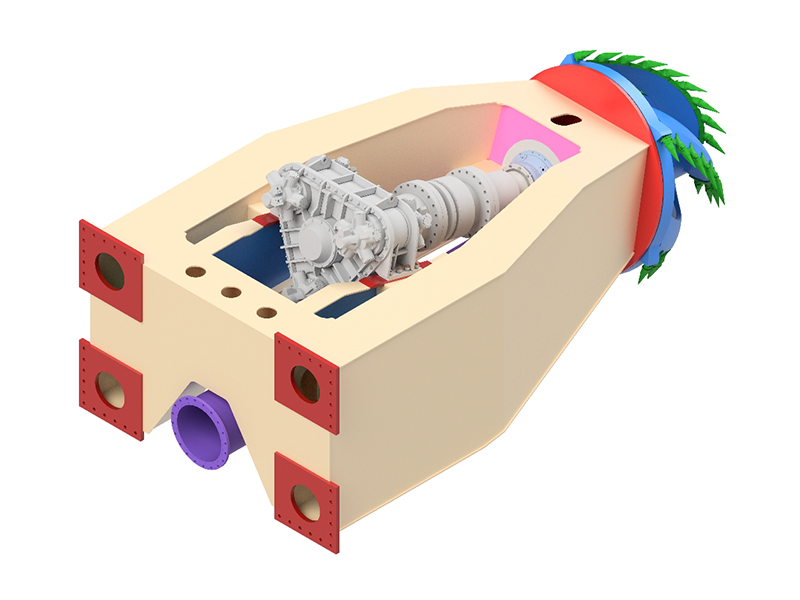
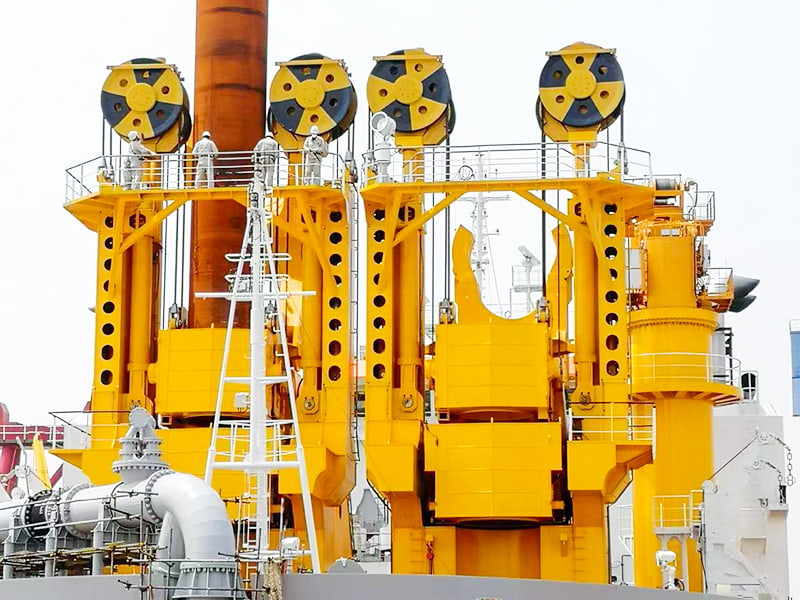
The cutter head does not work alone. It sits within a broader cutter suction assembly that includes the cutter shaft, cutter bearing, and cutter suction drive, all of which transmit rotational force from the ladder to the cutting face. On the vessel side, the dredger's overall performance also depends on its propulsion system, propeller shaft, and rudder system for maneuvering, along with the spud and spud carrier for positioning the vessel during excavation. A gantry supports the ladder assembly, while ball joints and gate valves manage pipeline flexibility and flow control along the discharge line.
Related Dredger Spare Parts
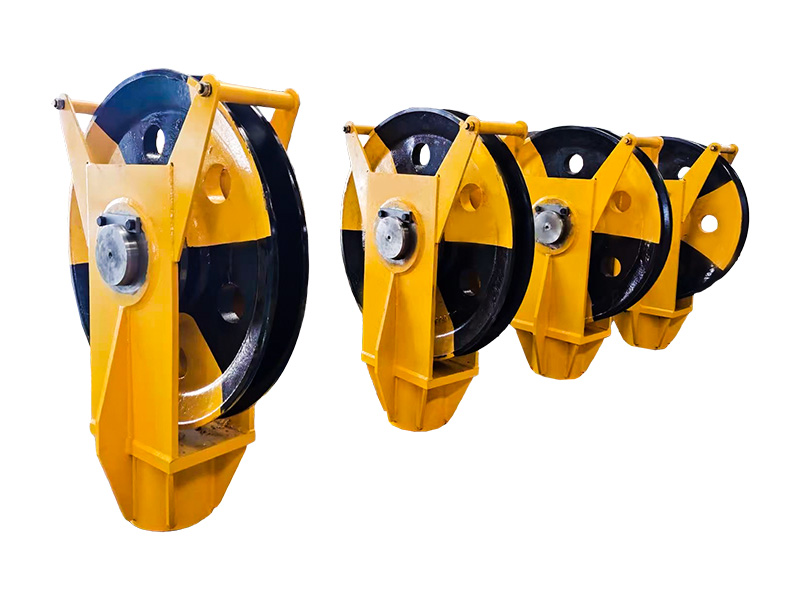
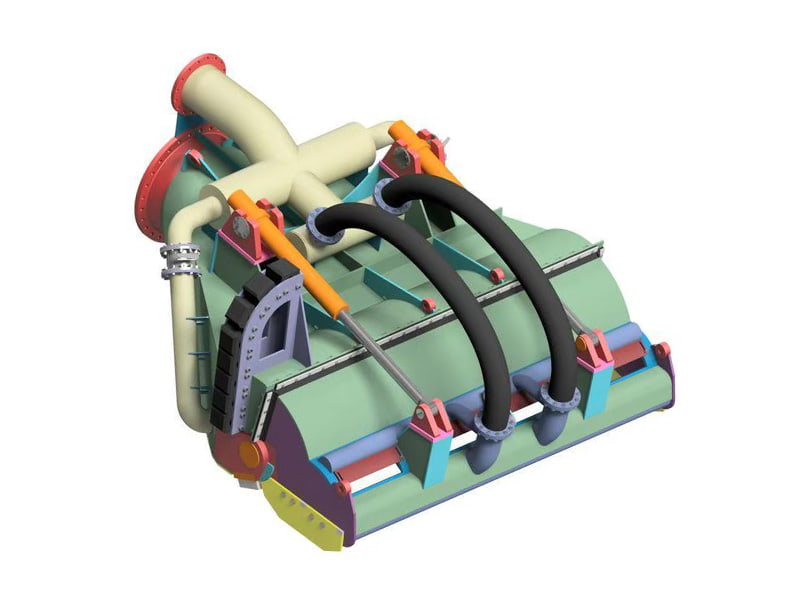
As a dredger equipment supplier, Sanyang manufactures a full range of dredge spare parts alongside the cutter head, covering both cutter suction dredger components and trailing suction hopper dredger systems.
Maintenance and Wear Management
Because the cutter head is in constant contact with abrasive material, wear management is the main ongoing cost driver. Three practices extend service life significantly:
- Inspecting and rotating or replacing teeth before the adapter itself begins to wear
- Fitting cutter skirts when working in loose or sandy ground to limit material spill and re-suspension
- Using bars between the blades in rocky or stony conditions to stop oversized fragments from entering the suction mouth
Routine inspection of the cutter shaft and cutter bearing alignment is equally important, since uneven wear on the cutter head often traces back to shaft misalignment rather than the blades themselves.
Selecting the Right Cutter Head
When specifying a cutter head, four factors should be reviewed together rather than in isolation: suction pipe diameter, expected soil hardness, required production rate, and the drive torque available from the cutter suction drive. A cutter head sized correctly for the pump but mismatched to soil hardness will either underperform on hard ground or wear out prematurely on abrasive material. Working with an experienced dredge spare parts manufacturer that can advise on blade arm count, tooth type, and ring diameter for a specific project typically produces better long-term cost results than selecting a generic off-the-shelf unit.

Copyright 2025 Taizhou Sanyang Heavy Machinery Co., Ltd. All Rights Reserved Professional Dredging Equipment Manufacturer

Back To Top