
 English
 中文简体
中文简体
What Is a Dredge Drag Head? Working Principles, Types, and Selection Guide
Content
Ask a dredging superintendent which single component most often decides whether a trailing suction hopper dredger (TSHD) meets its production target, and the answer usually comes back fast: the drag head.
A dredge drag head is the suction mouth fixed to the lower end of a TSHD suction pipe. The vessel lowers it onto the seabed and tows it slowly forward while the dredge pump keeps a vacuum in the pipe. As the head moves, it loosens sand, silt and other loose material, mixes the soil with water, and feeds the mixture upward into the hopper. In short, the drag head is the component that actually collects the material, which makes its design and condition the direct limit on the daily production of the whole vessel.
This guide explains how a drag head works, what its main parts are, which types are available, and what to check before buying a new drag head or replacement parts.
How a Dredge Drag Head Works
The working principle is simple to state: the dredge pump creates a low-pressure zone, and the drag head controls how much water and soil enter the system. The details, however, decide the production result.
The suction circuit
Because the drag head sits below the waterline, surrounding water pressure pushes the soil-water mixture toward the low-pressure zone created by the pump. The drag head is not a vacuum cleaner nozzle: its mouth geometry controls the inflow so the mixture keeps a workable density. In normal operation, the flow reaching the hopper contains roughly 20 to 40 percent solids by volume. Too thin means wasted pump energy; too thick risks clogging the pipe.
Loosening and feeding the soil
Forward motion does part of the job. The visor presses against the seabed, a row of teeth breaks up compacted soil, and high-pressure water jets positioned in front of the teeth fluidize the loosened material. This combination reduces the energy needed to lift the soil and keeps the suction steady even on an uneven bottom. The mixture then travels up the drag pipe assembly for trailing suction hopper dredgers toward the pump.
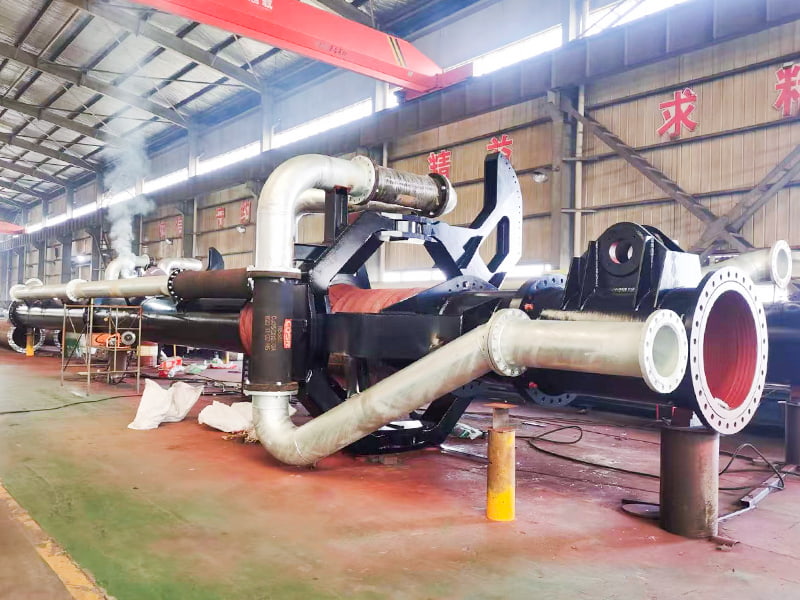 Custom CSD Drag Pipe Manufacturers, China CSD Drag Pipe FactorySanyang Heavy Machinery is China CSD drag pipe manufacturers and CSD drag pipe factory, focuses on the design and manufacturing of non-st...View Product →
Typical relationship between mixture density and delivered production. Efficiency peaks near 30 percent solids, which is why the drag head design controls inflow carefully.
Main Components of a Dredge Drag Head
A production drag head can weigh several tonnes, but the core layout stays consistent across most designs. Knowing the parts makes spare-part planning and troubleshooting far easier.
| Component | Function |
|---|---|
| Cap | Top structure connecting directly to the suction pipe. |
| Visor | Hinged lower assembly that follows the seabed and carries the cutting elements. |
| Toothed beam | Transverse beam holding teeth in a row perpendicular to the travel direction. |
| Teeth | Replaceable tips that break up consolidated sand, clay or gravel. |
| Jet pipes | High-pressure water lines mounted in front of the teeth. |
| Heel plates and wear pieces | Abrasion-resistant plates under the cap that protect the structure. |
| Nozzles | Outlets that distribute water across the full width of the mouth. |
Between the cap and the suction pipe, a cardanic joint for the dredge drag head allows the head to pivot while keeping the flow path sealed. It is one of the first parts to show wear in sandy soils, so operators often carry a spare onboard.
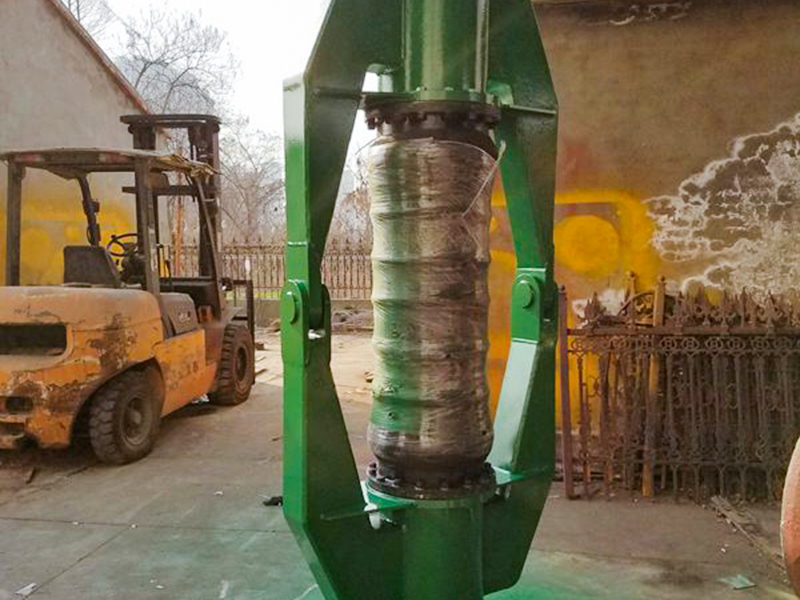 Custom Dredge Cardanic Joint Manufacturers, China Factory - Taizhou Sanyang HeavTaizhou Sanyang Heavy Machinery Co., Ltd is China Dredge Cardanic Joint manufacturers and Dredge Cardanic Joint factory, focuses on the d...View Product →
Types of Dredge Drag Heads
Drag heads are classed by how they loosen the soil. Three families cover the vast majority of TSHDs in service.
Flushing-type drag head
The flushing type relies mainly on high-pressure water jets to erode and fluidize the soil. It has no toothed beam or only very small teeth, and it is best suited to loose fine sand and silt. Its simple construction keeps maintenance low and production predictable on soft ground.
Cutting-type drag head
The cutting type adds a toothed beam with replaceable teeth mounted in front of the jets. The teeth cut into moderately compacted sand and clay that water alone cannot lift efficiently. This is the most common configuration for general harbour and approach-channel dredging.
Active cutting drag head
The active cutting type uses hydraulically driven or oscillating cutting elements instead of relying only on the forward motion of the vessel. It is specified for stiff clay, hard-packed gravel and other difficult soils where a passive head would stall or leave an uneven bottom. It costs more, weighs more, and consumes more hydraulic power.
| Type | Loosening method | Best soil conditions | Main trade-off |
|---|---|---|---|
| Flushing | High-pressure water jets | Loose sand, silt | Low wear, limited in compacted ground |
| Cutting | Teeth plus water jets | Dense sand, soft clay | Balanced production and cost |
| Active cutting | Powered cutting elements | Stiff clay, gravel, weak rock | Higher price and power demand |
How to Select the Right Drag Head and Teeth
Selection starts with the soil report, not with the product catalogue. Grain size, compaction, density and the percentage of gravel or shell content all change the recommendation.
Match the type to the soil
- Loose sand and silt with little compaction: a flushing-type head gives the best production per unit of power.
- Dense sand and soft to medium clay: a cutting-type head with the correct tooth profile prevents the teeth from skidding over the surface.
- Stiff clay, gravel and cemented layers: an active cutting head or a heavy cutting head with high jetting pressure is usually required.
Choose teeth by cutting conditions
Tooth shape controls both penetration and wear life. The common families are chisel teeth for sand and silt, pick teeth for clay, and heavy ripper teeth for gravel and harder ground. Because teeth are consumables, the plan should include a spare set and a clear replacement criterion based on wear measurement rather than visual judgement alone.
When a project requires a complete drag head instead of spare parts, the replacement must match the existing suction pipe diameter, hinge geometry, width and jetting flow. A complete dredge drag head assembly from a specialised manufacturer can be engineered to the original vessel drawings, including the toothed beam, jet pipes and heel plates.
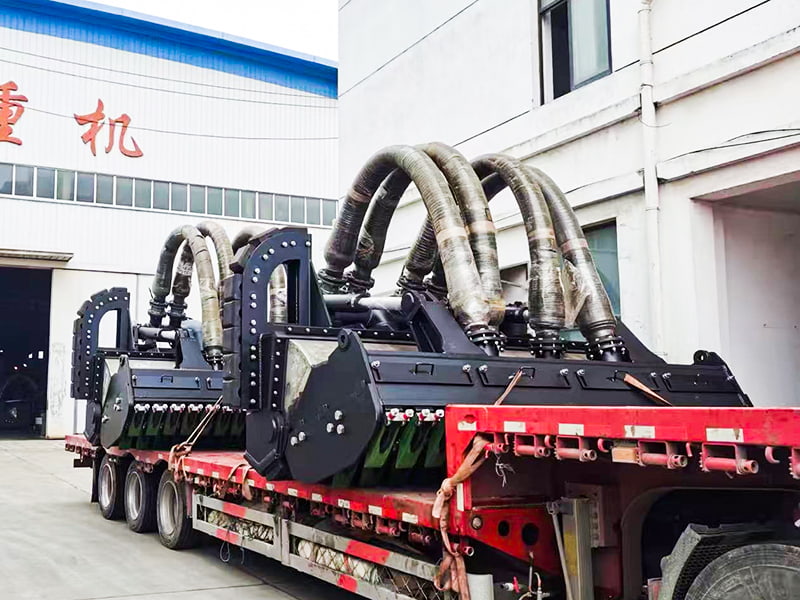 Dredge Draghead Manufacturers, Dredge Drag Head FactoryTaizhou Sanyang Heavy Machinery Co., Ltd is China dredge draghead manufacturers and dredge drag head factory, To cut the seabed, the dred...View Product →
Wear Life and Procurement Considerations
Drag heads operate inside a cloud of abrasive sand and water, so wear is unavoidable. Weekly visual checks and monthly thickness measurements on heel plates and visor linings are common practice. Teeth in clean sand can wear out in days, while a silt project may keep the same set for months.
Where wear typically occurs on a drag head
- Teeth - 35%
- Heel plates - 25%
- Jet nozzles - 20%
- Visor lining - 12%
- Joints and fasteners - 8%
Typical wear distribution in abrasive sand conditions. The pattern shifts when dredging clay or rock.
When ordering a new drag head or parts, confirm five parameters at a minimum: suction pipe diameter, drag head width, hinge pin arrangement, toothed beam pitch, and jetting flow rate. A manufacturer with in-house engineering can compare these against the vessel drawings and the dredge pump curve. Recent drag head deliveries from our workshop show the machining and assembly scale involved in a complete package.
Taizhou Sanyang Heavy Machinery, a heavy machinery manufacturer in Taizhou, China, builds drag heads and the full set of trailing suction hopper dredger components under one roof. If you are defining a spare-parts package or a full replacement drag head, contact our engineering team with your suction pipe dimension and soil report.
Frequently Asked Questions
What is the difference between a drag head and a cutter head?
A drag head is towed passively behind a trailing suction hopper dredger and uses the vessel's forward motion, teeth and water jets to collect material. A cutter head is a powered rotating tool mounted at the end of a ladder on a cutter suction dredger; it cuts soil mechanically before the mixture is sucked up.
Why does a drag head need water jets?
The jets perform two jobs: they loosen and fluidize the soil before it reaches the suction mouth, and they help control the water-to-soil ratio entering the pipe. Without them, compacted soil would block the mouth and the pump would lose suction.
How deep can a drag head work?
The operating depth depends on the pump suction performance and the length of the suction pipe. Most port and approach-channel work takes place within about 20 to 50 metres, while deep-sea TSHDs are built for considerably greater depths.
How often should drag head teeth be replaced?
There is no universal interval. In abrasive sand a set of teeth may last only a few days, whereas in silt the same teeth can last for months. Contractors measure tooth height regularly and replace teeth once the cutting edge drops below a minimum profile.

Copyright 2025 Taizhou Sanyang Heavy Machinery Co., Ltd. All Rights Reserved Professional Dredging Equipment Manufacturer

Back To Top