
 English
 中文简体
中文简体
Trailing Suction Hopper Dredger Drag Head Types: Flushing, Cutting, Active Cutting
Content
- 1 What a drag head does before the pump takes over
- 2 Main drag head types on a TSHD
- 3 How to choose the right drag head type
- 4 Drag head teeth and wear parts are part of the type decision
- 5 Operating and maintenance considerations
- 6 What to check when buying a TSHD drag head
- 7 Frequently asked questions about TSHD drag heads
A trailing suction hopper dredger can lose a significant portion of its potential production before the pump ever sees the soil. That is the practical reality when the drag head type does not match the seabed. Flushing heads, cutting heads, and active cutting heads each solve a different problem: loosening sand, cutting compact clay, or maintaining efficiency in stiff ground. Once you know which type matches your soil, you can improve cycle times, reduce wear, and avoid unnecessary downtime. The drag head is the part that controls how much soil is fed into the suction pipe, so choosing the wrong design is not just a maintenance issue; it is a production issue.
What a drag head does before the pump takes over
The drag head is attached to the lower end of the suction pipe and towed along the seabed. It has two main structural parts: a cap that connects to the suction pipe, and a visor that pivots on a horizontal axis so it can follow the bottom contour. The visor carries either water jets, a tooth beam, or both. Water injected under pressure fluidizes the soil while teeth break up harder layers. The soil-water mixture then enters the suction mouth and moves up the pipe into the hopper.
The type of drag head used determines how the soil is prepared for intake. A dredge drag head assembly that relies mainly on jetting can produce very well in loose sand, but the same head will lose efficiency in stiff clay because the water may simply wash over the surface instead of cutting into it.
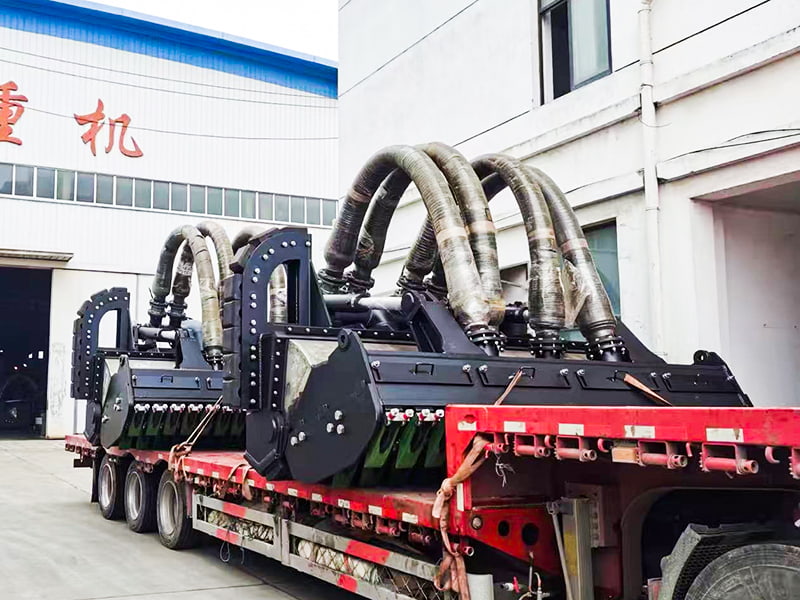 Dredge Draghead Manufacturers, Dredge Drag Head FactoryTaizhou Sanyang Heavy Machinery Co., Ltd is China dredge draghead manufacturers and dredge drag head factory, To cut the seabed, the dred...View Product →
Main drag head types on a TSHD
Most TSHD drag heads fall into three groups. The lines between them are not always sharp; some designs combine jetting with teeth, and an active cutting head often includes water jet assistance as well. The labels describe the dominant mechanism.
Flushing-type drag head
This head uses high-pressure water jets as the main soil loosening tool. A row of nozzles is positioned ahead of the intake or along the visor. The water penetrates the soil and creates a fluidized slurry that flows into the suction mouth. It is the most efficient design in loose to medium-dense sands, silts, and fine gravel.
Because there are no heavy teeth scraping the bottom, flushing heads generally show lower wear and require less maintenance. The trade-off is that compaction and cohesion reduce performance quickly. Once the soil contains clay, compacted layers, or large shells, the water jet cannot break the structure reliably.
Cutting-type drag head
A cutting drag head adds a tooth beam to the visor. The teeth penetrate the soil as the head is towed forward, while water jets help carry the loosened material into the suction mouth. This construction handles compact sand, clay, medium-soft to stiff clay, and gravel with more control than a flushing-only design.
The cutting head is the most common general-purpose choice for port maintenance dredging and capital projects where soil varies across the site. It costs a bit more in wear parts, but it keeps production stable where a pure flushing head would lose efficiency.
Active cutting drag head
An active cutting drag head goes one step further: the teeth or the visor itself are driven mechanically or hydraulically. Instead of relying on the forward motion of the ship to pull teeth through the soil, the head moves the cutting tools against the soil. This is useful for stiff clay, cemented sand, and weathered rock layers.
Active cutting heads are heavier and require higher installed power on the drag arm or visor. They also need a more robust support structure. In exchange, they provide the most predictable production in difficult soil and avoid the problem of teeth skidding over a hard layer.
How to choose the right drag head type
Selection starts with a small number of questions. What is the main soil type? How compact is it? Does it vary along the dredging alignment? What is the vessel’s pump and jet water capacity? The answers usually point to one of the three families above. The table below summarizes the normal choice.
| Drag head type | Best soil | Main loosening mechanism | Typical production profile | Wear profile |
|---|---|---|---|---|
| Flushing | Loose sand, silt, fine gravel | High-pressure water jets | High in loose granular soil; drops sharply in compacted or cohesive soil | Low to moderate |
| Cutting | Compact sand, clay, gravel | Teeth plus water jet assistance | Steady over mixed soil; moderate in very stiff ground | Moderate to high |
| Active cutting | Stiff clay, cemented sand, weak rock | Mechanically or hydraulically driven teeth | Stable in difficult soils; less sensitive to compaction | Higher, with more complex components |
The bar chart below shows an indicative productivity pattern for typical soil conditions. It is not a universal rating; hull, pump, and drag arm configurations change the numbers. But it explains why a flushing head can be the best production tool in one project and the wrong tool in the next.
Indicative drag head productivity by soil condition
Relative production, higher is better
Indicative values for comparison based on field experience.
Drag head teeth and wear parts are part of the type decision
The type of drag head determines the tooth system you need. Flushing heads may run with small or no teeth, while cutting heads use replaceable teeth mounted on a tooth beam. Active cutting heads use heavier teeth because they are driven into the soil rather than pulled through it.
When comparing options, look at the tooth holder, the tooth tip shape, and the wear material. A harder tooth lasts longer in abrasive sand but is more brittle in gravel. A sharper tooth cuts clay better but wears faster in sand. Finally, check whether the heel plate and water jet nozzles can be replaced without cutting the drag head structure, because these are the first parts to wear.
Operating and maintenance considerations
A drag head works at the interface between a steel structure and abrasive, often saline, soil. The wear pattern is not random. In field experience, certain components receive most of the attention in a typical medium-term maintenance cycle.
Typical drag head maintenance attention distribution
- Teeth and tooth holders - 45%
- Water jet nozzles - 20%
- Visor and heel plates - 15%
- Hinge and seals - 12%
- Cap and suction connection - 8%
Indicative field distribution based on typical TSHD drag head service records.
You can reduce the cost of this wear by selecting the right drag head type in the first place. A flushing head in pure sand will wear its nozzles and heel plate slowly. Put that same head in gravel and the nozzles become short-lived consumables. A cutting head with replaceable teeth is easier to maintain in mixed soils because you only replace the teeth rather than the whole visor assembly.
What to check when buying a TSHD drag head
When you order a new drag head or a replacement assembly, start with the connection dimensions. The cap must match the existing suction pipe and cardanic joint. If the joint is worn or the pipe diameter has changed, the drag head alone will not solve the problem. Measure the cap bore, the hinge pin diameter, and the distance from the hinge axis to the tooth beam before choosing a tooth configuration.
Then define the jet water requirement: flow, pressure, and nozzle arrangement. A flushing head with too little water pressure will not fluidize the soil; a cutting head with too much water may wash out the fine fraction and lower hopper density. The right design is a balance between soil cutting and slurry transport.
Because a new drag head has to survive in a demanding environment, most operators order it along with related worn parts. A suction drag pipe is a common companion because the lower bend and flanges see the same abrasive slurry and are often replaced in the same maintenance window. Confirming the complete wear path from drag head to hopper usually gives a more useful result than buying an isolated head.
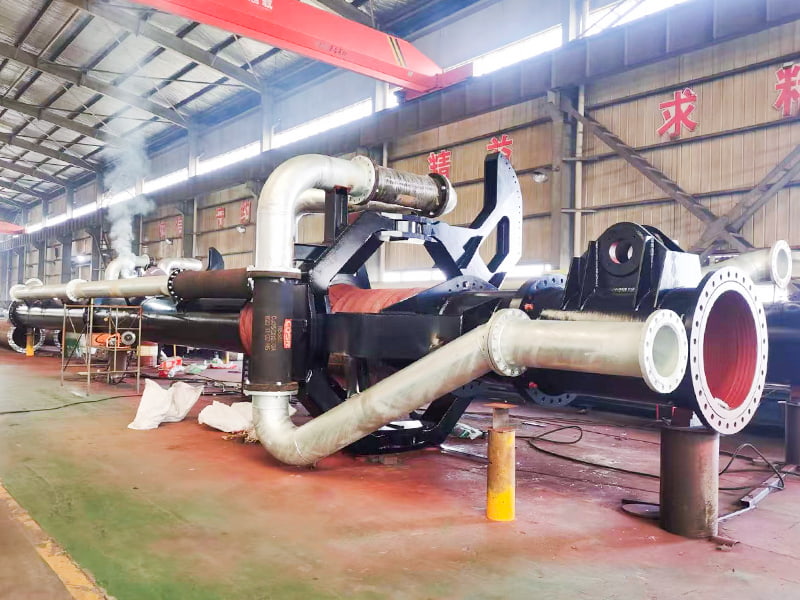 Custom CSD Drag Pipe Manufacturers, China CSD Drag Pipe FactorySanyang Heavy Machinery is China CSD drag pipe manufacturers and CSD drag pipe factory, focuses on the design and manufacturing of non-st...View Product →
Frequently asked questions about TSHD drag heads
Can the same TSHD use more than one drag head type?
Yes. Many TSHDs switch drag heads depending on the project. A flushing head may be fitted for sand or silt projects, a cutting head for mixed soil, and an active cutting head for stiff clay. The vessel must have the structural and hydraulic provisions for the heavier head when an active type is considered.
Which drag head is best for compact sand?
A cutting-type drag head is usually the best match. It can break the sand structure with teeth and still use water jets to create a slurry. A flushing head may work if the upper layer has been loosened by a previous pass, but production will drop once compaction increases.
What is the difference between flushing and cutting drag heads?
A flushing drag head relies on water jets to fluidize the soil before it enters the suction mouth. A cutting drag head uses a tooth beam to cut or rake the soil while water jets assist the intake. The flushing head is more efficient in loose sand; the cutting head is more consistent in mixed and compact soil.
Why is the drag head so important to TSHD performance?
The drag head is the first step in the dredging cycle. If it cannot loosen and feed soil into the suction pipe at the correct concentration, the pump may lose suction, the hopper may fill slowly, and the vessel will need extra time to complete each load. That is why drag head selection has a direct effect on project cost.
Are drag head teeth replaceable?
Most cutting and active cutting drag heads use replaceable teeth that are pinned or bolted to a tooth beam. Tooth shape and material are selected for the soil. Keeping a set of wearing teeth onboard is a common way to avoid an unscheduled production stop.

Copyright 2025 Taizhou Sanyang Heavy Machinery Co., Ltd. All Rights Reserved Professional Dredging Equipment Manufacturer

Back To Top