
 English
 中文简体

Global Dredging Market Trends 2026: What Buyers of Dredger Components Should Expect
Content
- 1 The 2026 Market on One Page
- 2 Four Trends That Actually Move Component Orders
- 3 Where Demand Splits: Cutter Suction Versus Trailing Suction
- 4 Lead Times, Tolerances and the Risks Buyers Underestimate
- 5 What to Put in the Specification Before You Send an RFQ
- 6 Choosing a Component Partner for the Next Few Years
- 7 Frequently Asked Questions
- 8 The Short Version
In early 2026 a dredging contractor signed a two-year charter, then went back to its suppliers with a revised schedule: two cutter head and drive assemblies, a set of spud guides and a full draghead wear package, all needed roughly 40% earlier than the contract had assumed. That single phone call describes the dredging market better than any headline growth figure.
The conclusion first: 2026 is a lead-time market, not a price market. Demand is no longer carried by one boom region. It comes from port and channel expansion in the Gulf, South and Southeast Asia, from offshore wind and coastal defence work in Europe and Northeast Asia, and from steady renewal of an ageing hopper and cutter fleet. Heavy fabrication capacity, not order intake, is the scarce resource.
For shipyards, contractors and design institutes, that changes the first question in every negotiation. Not "what does the part cost", but "who has already built one like this, and when can it be on the quay".
The 2026 Market on One Page
Six forces shape what component buyers face this year. The table below summarises them and what each one does to your order book.
| Force | What is changing | What it means for component buyers |
|---|---|---|
| Project mix | Port expansion, land reclamation and channel maintenance dominate the Gulf and Asia | Repeat demand for wear parts instead of one-off flagship orders |
| Energy and coastal works | Offshore wind landfalls, cable routes and beach nourishment add dredging scope | Shorter windows, more mid-size cutter suction units on tight schedules |
| Fleet age | A large share of the hopper and cutter fleet is well past 20 years old | Refits and repowers, plus higher consumption of heads, teeth and dragheads |
| Environmental rules | Fuel, emissions and ballast water requirements keep tightening | Rebuilds that reach shafting, rudders and control systems, not just engines |
| Yard capacity | Newbuild slots stay concentrated in a few Asian yards | Component delivery, not hull price, decides whether a project starts on time |
| Input costs | Steel, castings and freight remain volatile | Fixed-price contracts need a clear renegotiation clause |
None of these forces is dramatic on its own. Together they explain why 2026 quotations come back with longer dates and fewer options than buyers saw three years ago.
Four Trends That Actually Move Component Orders
1. Energy and coastal projects pull dredging into new waters
Gulf port programmes, Indian and Southeast Asian channel deepening, and European offshore wind landfalls all need dredging before construction starts. These projects are smaller and more numerous than the mega-reclamation schemes of the last decade, which changes the spares pattern: a contractor running three mid-size cutter suction dredgers on three sites needs three sets of teeth, three sets of arm pieces and a much faster spares loop.
2. Hopper fleet renewal is the quiet driver
A large share of working trailing suction hopper dredgers were delivered before 2005. Owners facing another five years of service usually choose a refit: new engines, new shafting, rebuilt hopper doors, replacement overflow ducts and gate valves. Refits are less visible than newbuild news but generate more component orders per vessel, and they arrive with shorter notice.
3. Emissions rules change the specification, not just the engine room
A repower changes the torque curve, which changes shaft alignment, bearing loads and sometimes the rudder stock and steering gear. Electric and hybrid drives are also reshaping cutter ladder and winch arrangements. If a 2026 refit includes new propulsion, budget the shaft and rudder scope at the same time.
4. Yard concentration means the supply chain sets the schedule
With newbuild slots booked out at a handful of yards, the bottleneck moves downstream to castings, forgings, large machined rings and non-standard fabrications. A hull can be finished and still not sail because a spud or a suction bend is three weeks late. Buyers who run component procurement as a separate, earlier track start on time; those who bolt it onto the hull contract do not.
Where Demand Splits: Cutter Suction Versus Trailing Suction
Most wrong quotations trace back to one cause: the buyer described a part for the wrong dredger type. Both vessels move slurry, but with different hardware.
| Function | Cutter suction dredger | Trailing suction hopper dredger |
|---|---|---|
| Excavation | Cutter head, cutter teeth, cutter drive assembly, dredge arm pieces | Draghead, drag pipe, cardan joint |
| Suction line | Suction bend with arm pieces, swivel bend, bow coupling | Drag pipe, bow connection, turning gland |
| Positioning | Spud installation, bridge pulley block, swing winches | Side wire blocks, gantry, dredger winch |
| Hopper and discharge | Not applicable on most units | Hopper door, self-emptying door, overflow duct, gate valve, swell compensator |
| Shared across both | Ball joints, wear liners, turning glands | Ball joints, wear liners, turning glands |
System boundaries are worth checking before any enquiry goes out. A short walk-through of the main cutter suction dredger components shows how the ladder, cutter drive and suction line interlock, and that map is usually worth more than a few percent on unit price.
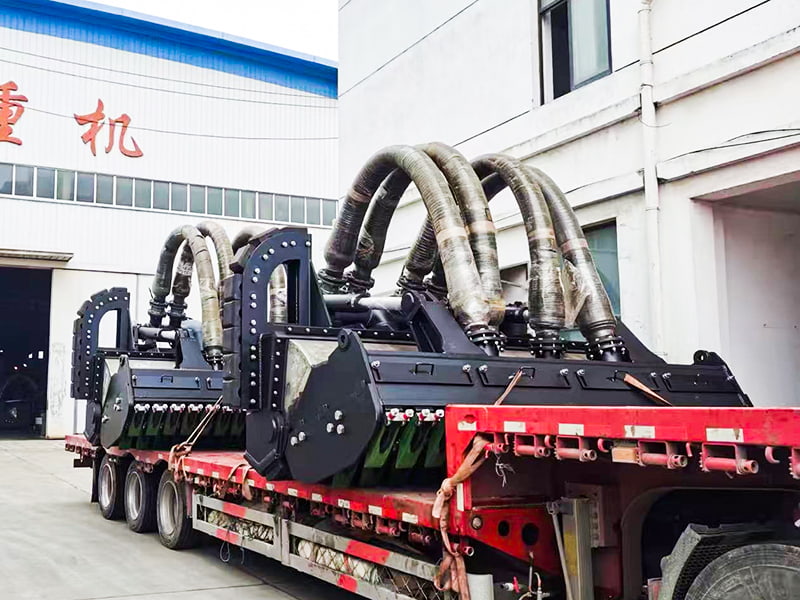
 Dredge Cutter Head Cutter Drive Assembly for Cutter Suction DredgersCore cutter suction dredger drive with flexible coupling, planetary reducer, hydraulic clutch and forced lubrication; useful when checking system boundaries before tender enquiries.View Product →
Lead Times, Tolerances and the Risks Buyers Underestimate
Five risks recur in 2026 tenders, and none of them shows up in the quoted unit price.
- Casting and forging slots. Large non-standard castings are booked weeks or months ahead; a supplier without reserved foundry capacity can accept an order and still miss the date.
- Wear metallurgy. Cutter teeth and draghead lips depend on alloy choice, hardness range and hard-facing quality. A tooth that lasts 30% less is not cheaper at all.
- Interface tolerance. Bolt circles, spigot diameters, keyways and flange faces must match an existing ladder or drag pipe, or the deviation becomes weeks of fitting on site.
- Approval paperwork. Class witness points, material certificates and non-destructive testing records are deliverables, and missing documents stop installation as effectively as a missing part.
- Packing and freight. Oversized, awkwardly shaped items need cradle design; poor sea fastening damages more dredge parts in transit than most buyers expect.
A supplier who has reserved foundry capacity, can name the hardness range and will send dimensional records before shipping is usually the cheaper choice over five years, whatever the first quotation says.
 Dredge Draghead for Trailing Suction Hopper DredgersSteel draghead with replaceable teeth, water jet nozzles and suction pipe options; check specifications and supplier records before comparing five-year costs.View Product →
What to Put in the Specification Before You Send an RFQ
A specification covering these seven points removes most of the argument later.
- Vessel type, size and duty cycle, including dredging depth, soil type and whether the duty is continuous or intermittent.
- Class society and witness requirements, naming which of CCS, BV, ABS or RINA must sign off, and at which stage.
- Interface drawings: existing ladder geometry, flange standard, bolt pattern and the tolerance you can still accept on site.
- Material and wear allowance: base grade, hardness target, hard-facing method and expected wear life between dockings.
- Spares strategy: one head that lasts five years, or two that last three years each.
- Documentation: material certificates, NDT reports, dimensional records and as-built drawings.
- Delivery basis and packing: Incoterms, cradle design, lifting points and port of discharge.
Choosing a Component Partner for the Next Few Years
In a tight market the advantage goes to manufacturers that build whole systems rather than single wear parts. Non-standard heavy machinery is a design problem before it is a production problem, so drawing, casting, machining and class inspection should sit with one responsible party.
Taizhou Sanyang Heavy Machinery works in that space. The company designs and builds non-standard heavy machinery in three areas: complete shaft and rudder systems for vessels from 20,000 to 200,000 tonnes, dredging equipment for cutter suction and trailing suction hopper dredgers, and offshore wind power equipment. Design, fabrication and testing sit under one industrial base, with quality management certified to CCS ISO 9001-2015 and approvals from CCS, BV, ABS and RINA. Products have reached more than 20 countries including Europe, the United States, Brazil, Chile, Japan and Croatia, alongside long cooperation with dredging groups, shipbuilding groups and marine research institutes.
For a 2026 order that matters in one specific way: a single house can take responsibility for a cutter drive assembly, a drag pipe and a propeller shaft assembly, which removes the interface arguments between three suppliers when a project is already late. It is worth letting the engineering review run in parallel with your commercial evaluation.
 Custom Propeller Shaft Assembly for Marine Propulsion SystemsShaft produced to drawings up to 18 m length and 1.8 m diameter, with one-stop design-to-after-sale service; useful when consolidating propulsion interfaces.View Product →
Frequently Asked Questions
Is 2026 a good year to place component orders?
Yes, but earlier than usual. Demand is tied to funded projects rather than speculation, and the constraint is shop and foundry capacity. Place orders about one quarter earlier than you would have in 2022, and confirm the foundry slot in writing.
Should we refit the dredger or buy only replacement wear parts?
Judge by remaining service life. With more than five years left, a structured refit covering wear parts, shafting, hopper doors and valves usually costs less per year of remaining life than repeated emergency replacements. With under three years left, buy only what keeps the vessel working.
How long does a non-standard cutter head or draghead take?
It depends on whether the pattern already exists. A repeat item on a proven pattern is a matter of weeks; a first-off casting with new patterns, machining and class witness adds substantial time. Send a dimensioned drawing, not a photograph, to get a realistic date.
Which certifications should we ask for?
Ask which class society will inspect the item, request a quality management certificate such as ISO 9001-2015, and require material traceability for the cast or forged body. If a supplier cannot name the witness points, the paperwork is what will slip.
The Short Version
The 2026 dredging market is not short of work; it is short of time. Project pipelines in the Gulf, Asia and Europe keep cutter and hopper fleets busy, an ageing hopper fleet keeps refit yards busy, and both keep component shops busy.
Three habits follow from that. Freeze interfaces early, put class and documentation requirements into the RFQ rather than the purchase order, and place work with a manufacturer that owns the engineering as well as the machining. Do those three things and the rest of 2026 looks manageable, whatever the headlines say.

Copyright 2025 Taizhou Sanyang Heavy Machinery Co., Ltd. All Rights Reserved Professional Dredging Equipment Manufacturer

Back To Top