
 English
 中文简体

How to Choose a Dredger Parts Supplier: Traceability Checks Before Order
Content
A 3,500 m³ trailing suction hopper dredger lost five working days when a replacement draghead arrived with the bolt pattern on its trunnion 6 mm off the original. The part itself was inexpensive. The unscheduled dry-docking, the crane hire and the idle crew were not.
Judge a dredger parts supplier by dimensional traceability, material records and wear-part repeatability before you ever discuss price. A workshop that can work from the original drawing, issue a 3.1 material certificate and repeat the hardness of the previous batch is worth a premium. A workshop that quotes from a photograph and a tape measure is a schedule risk, however attractive the number on the quotation looks.
Everything below follows that order: which part families behave differently, which documents actually prove a claim, which tolerances matter on a working dredger, and where a low price usually hides its cost.
Match the Part to the Dredger Type First
A cutter suction dredger and a trailing suction hopper dredger share a hull and a pump room, and very little else at the working end. Before comparing quotations, ask the supplier to name the components they would actually deliver.
On the cutter suction side that list normally runs through the cutter head and cutter drive assembly, cutting teeth, dredge arm pieces, suction bend with arm pieces, swivel bend, bow coupling, bridge pulley block and spud installation. On the trailing side it runs through the draghead, drag pipe, cardanic joint, bow connection, side wire block, hopper door, self-emptying door, overflow duct, swell compensator, gate valve, winch and gantry.
The two families also fail in different ways. A cutter head is a wear item judged on tooth retention and adaptor bore fit. A swell compensator is a motion component judged on seal life and fatigue cycles. A supplier who is genuinely strong on one is not automatically strong on the other, and a supplier who claims both without a machine shop to back it up is worth a second visit.
If you need a refresher on how the cutting end fits together, our plain-language guide to the components of a cutter suction dredger walks through the chain from cutter head to spud.
 Dredge Cutter Head for Cutter Suction DredgersReview blade, tooth, and size options for cutter suction dredgers before asking which wear parts suppliers cast, fabricate, or machine in-house.View Product →
One more question earns its keep on the first call: which of these parts are cast, which are fabricated, and which are machined in-house? A workshop that casts its own wear parts controls the hardness that comes out of the furnace. A workshop that buys castings and only machines them cannot tell you what happened during heat treatment.
Six Checks That Separate a Manufacturer from a Trading Desk
Most supply failures trace back to information the buyer never requested. These six checks take one meeting and one document review, and they remove most of the risk.
- Drawing control. Ask whether they hold the original drawing, a class-approved drawing or only a reverse-engineered scan. Reverse engineering is legitimate for obsolete parts, but it must come with a stated tolerance stack and a first-article report you can compare against the worn original.
- Material and heat treatment. Request mill certificates to EN 10204 3.1 and the heat-treatment chart for cast or forged parts. For wear components, ask for a hardness map rather than a single spot reading, because a cutter head or tooth that varies 15 HRC across its surface will wear unevenly.
- Welding and non-destructive testing. Fabricated structures such as dredge arm pieces, gantries and overflow ducts live or die by weld quality. Look for qualified weld procedures, welder qualifications to ISO 9606, and magnetic particle or ultrasonic reports on critical seams and thick sections.
- Machining envelope and metrology. A supplier who cannot bore a spud sleeve or true a large flange in-house will subcontract it, and the tolerance chain grows with every handover. Ask for the maximum turning diameter, the boring mill capacity and the calibration status of the measuring equipment.
- Quality system and class recognition. An ISO 9001 certificate is the baseline. Recognition from classification societies such as CCS, BV, ABS or RINA tells you the workshop has already survived a third-party survey and understands the paperwork a yard superintendent will ask for.
- A dimensional report with every shipment. The single most useful habit in this trade is a per-part inspection sheet keyed to the serial number. It turns a future dispute into a ten-minute comparison and gives you a wear baseline for the next replacement.
Tolerances, Standards and the Paperwork That Protects You
Not every dimension deserves equal attention. On a cutter head, the adaptor bore fit and tooth pocket spacing decide whether the drive assembly runs smoothly or shakes itself loose. On a shaft line, alignment and bearing fits within a few hundredths of a millimetre decide whether a bearing runs for fifteen years or overheats in the first season. On a ball joint or bow coupling, sphere radius and seal groove geometry decide whether slurry stays inside the pipe.
Practical buyers therefore attach a short verification list to the purchase order instead of accepting a generic certificate of conformity. The table below shows what to check for each component group and which document proves the check was done.
 Custom Dredge Ball Joints for Mud PipesReview adjustable ball joints for mud delivery and discharge pipes, with custom angles, pressure ratings, and flange or welded mounting options.View Product →
| Component group | Critical item to verify | Document to request | Cost of skipping the check |
|---|---|---|---|
| Cutter head and drive assembly | Adaptor bore fit, tooth pocket spacing, drive flange runout | Dimensional inspection report, 3.1 material certificate | Vibration, tooth loss, gearbox load spikes |
| Cutting teeth and wear liners | Hardness and hardfacing thickness | Hardness map in HRC, hardfacing weld procedure | Faster wear, more frequent stoppages |
| Spud installation and spud | Sleeve clearance, straightness, weld soundness | MT or UT report, post-weld heat treatment record | Spud binding, cracked welds in swell |
| Draghead and drag pipe | Lip geometry, trunnion bolt pitch, wall thickness | 3D scan comparison, ultrasonic wall readings | Poor bite, water ingress, repeat dockings |
| Bow coupling and ball joint | Sphere radius, seal groove, swivel freedom | Profile trace, pressure test record | Leakage, slurry loss, joint seizure |
| Shaft and rudder assemblies | Bearing fit, alignment, surface finish | Alignment protocol, class witness record | Bearing overheating, class remarks |
Lead Time, Wear Life and the Real Cost of a Cheap Part
Dredging economics are measured in cost per cubic metre moved, not cost per kilogram delivered. A draghead lip priced 8% below the market average but lasting 15% fewer operating hours has already lost you money before the second replacement is ordered, and the arithmetic gets worse once you add the dry-dock slot you did not need to book.
Lead time deserves the same treatment. Cast wear parts typically need pattern preparation, casting, heat treatment and machining, so a realistic window is measured in weeks rather than days. Ask for the lead time on the first article separately from the repeat order, and confirm whether the supplier holds patterns, so the next order does not restart the process.
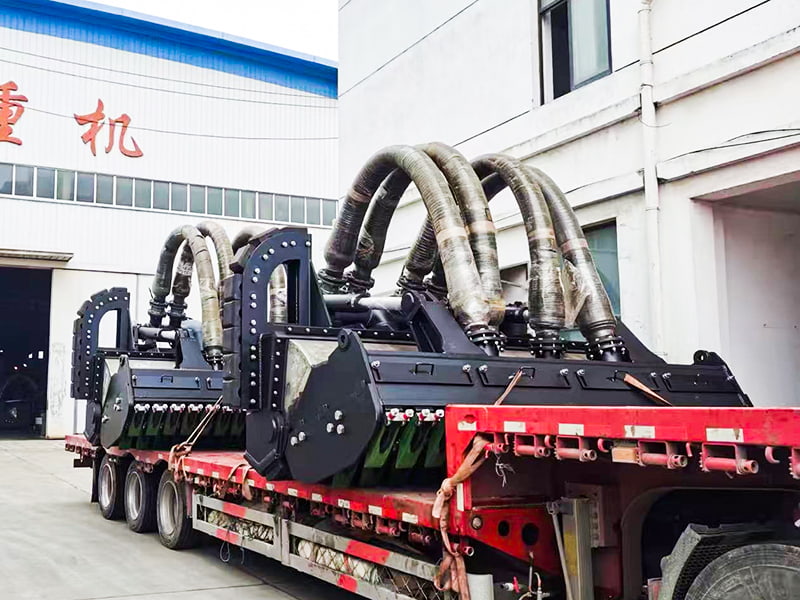 Dredge Draghead for Trailing Suction Hopper DredgersReview draghead types, replaceable teeth and wear parts, and suction-pipe sizes to plan trailing suction hopper dredger spares and lead times.View Product →
A sensible spares strategy follows directly. For a cutter suction dredger, hold one complete cutter head, a full set of teeth and one suction bend liner. For a trailing unit, hold a draghead lip, cardanic joint seals and one complete swell compensator seal kit. Those items cover the failures that stop production, and they buffer the lead times you cannot compress.
Finally, ask what happens after delivery. A supplier who will send an engineer to line-bore a spud sleeve on site, or who will re-check alignment after installation, is offering something a discount quotation usually cannot match.
FAQ: Dredger Parts Sourcing
Can a trading company be a legitimate supplier?
Yes, if it is transparent about the workshop behind the part and lets you audit that workshop. The problem is not the trading model itself but the missing drawing control and the extra handover in the tolerance chain. Ask who signs the inspection report.
What does class approval actually cover?
It usually covers the material, the manufacturing procedure and the survey of specific items, not every dimension of every part. Class recognition for the workshop and a part-specific inspection report are two different things, and experienced buyers ask for both.
How many spare cutter heads should we hold?
One complete assembly per dredger is a common baseline for units working abrasive ground, plus a full set of teeth and a spare adaptor. Dredgers working sand and gravel with high quartz content often justify a second head to avoid production stops during rebuilds.
What should a first-article inspection include?
Dimensional readings against the drawing, material certificate, hardness results, NDT reports where applicable and photographs of critical features. Keep the report with the machine history so wear trends can be compared across replacements.
Choosing a dredger parts supplier comes down to evidence. Ask for the drawing, the certificate, the hardness map and the inspection report, and the field narrows quickly to workshops that genuinely manufacture what they sell. Price then becomes a comparison between qualified options instead of a gamble on unverified claims.
Our team in Taizhou builds cutter suction and trailing suction hopper dredger components, shaft and rudder assemblies and pile-driving hydraulic clamp systems, with quality systems certified to CCS ISO 9001-2015 and recognition from CCS, BV, ABS and RINA. Parts ship to more than 20 countries. If a dry-docking is approaching, send the drawing number, the dredger type and the delivery window, and reach the team here for a dimensional and lead-time assessment.

Copyright 2025 Taizhou Sanyang Heavy Machinery Co., Ltd. All Rights Reserved Professional Dredging Equipment Manufacturer

Back To Top